Maltese: Complete Breed Guide to Temperament, Health, and Care


Maltese: Complete Breed Guide to Temperament, Health, and Care
The Maltese is an ancient companion breed, refined into its modern form during the Victorian era through selective breeding. It was recognized by the American Kennel Club in 1888 and definitively accepted by the Fédération Cynologique Internationale in 1955 under Italian patronage, reflecting its long association with the Mediterranean.
Photo: Canarian / Wikimedia Commons, CC BY-SA 4.0
| Origin | Height | Weight | Lifespan | Energy Level |
|---|---|---|---|---|
| Italy (Mediterranean/Malta historically) | Males 21-25 cm · Females 20-23 cm | 3-4 kg | ~11-13.1 years | Moderate |
Executive Summary
The Maltese is lively, calm, and affectionate, one of the oldest companion breeds with a documented history as a favored household pet in antiquity. Ranked 59th in canine intelligence studies, it was bred purely for companionship, ornament, and show, never for working purpose.
What Owning a Maltese Involves
| With training & care | Without it |
|---|---|
| Lively, affectionate lapdog companion for any household | Anxiety-driven behavior when left alone too often |
| Regular cardiac screening catches heart defects early | Undiagnosed Patent Ductus Arteriosus or other heart issues |
| Joint care reduces luxating patella complications | Untreated luxating patella affecting mobility |
| Daily coat grooming keeps the long white coat healthy | Matting and skin issues from neglected coat care |
3 Real-World Scenarios
- An owner researching the breed’s ancient history: learns the Maltese has documented status as a favored household pet since antiquity, one of the longest continuous companion-breed histories of any dog.
- A family wanting a calm, affectionate small companion: picks the Maltese for its documented lively-but-calm temperament, well suited to companionship-focused households.
- A vet monitoring a Maltese puppy’s heart: screens for Patent Ductus Arteriosus, a documented congenital heart defect in the breed.
2 Maltese Facts
1. The Maltese has one of the longest documented histories of any companion dog breed, recorded as a favored household pet in antiquity — centuries before most other toy breeds existed in any recognizable form.
2. Despite its long association with the island of Malta in its name, the FCI formally placed the modern breed standard under Italian patronage in 1955, reflecting the breed’s complex Mediterranean history rather than a single-country origin.
🐾 Try It: What Breed Does Your Dog’s Description Match?
Click through real physical traits and see how close your dog’s description comes to a Maltese or another breed.
🐾 What Breed Is My Dog? Click the traits you see
Try it instantly — no sign-up. Watch the match bar grow as you go.
For fun and general guidance only — not a substitute for a professional breed evaluation or DNA test. Photo credits shown above each result.
How the Maltese Compares to Other Breeds We’ve Covered
| Breed | Origin | Male Weight | Energy Level | Guarding Instinct |
|---|---|---|---|---|
| Rottweiler | Germany | 50-60 kg | High | Very high |
| Doberman Pinscher | Germany (1880s) | 40-45 kg | Very high | Very high |
| German Shepherd | Germany (1899) | 30-40 kg | Very high | High |
| Beauceron | France (1587) | 30-45 kg | High | High |
| Golden Retriever | Scotland (1868) | 29-34 kg | High | Low |
| Labrador Retriever | England (1903) | 29-36 kg | High | Low |
| French Bulldog | France (1898) | 9-14 kg | Moderate | Low |
| Poodle (Standard) | Germany/France | 20-32 kg | High | Low |
| Bulldog | England (1875) | ~25 kg | Low | Low |
| Beagle | England (1830s) | 10-11 kg | High | Low |
| Dachshund | Germany (1700s) | 7-15 kg | Moderate | Moderate |
| Yorkshire Terrier | England (1870s) | ≤3.2 kg | Moderate | Low |
| Boxer | Germany (1895) | 30-32 kg | High | High |
| Siberian Husky | Russia (Chukchi) | 20-27 kg | Very high | Low |
| Great Dane | Germany (1878) | 54+ kg | Moderate | Moderate |
| Chihuahua | Mexico | 1-3 kg | High | Low |
| Pug | China | 6-8 kg | Low | Low |
| Border Collie | UK (1893) | 14-25 kg | Very high | Low |
| Australian Shepherd | USA | 16-32 kg | Very high | Moderate |
| Shih Tzu | Tibet/China | 4-7.5 kg | Moderate | Low |
| Cocker Spaniel | England | 13-14.5 kg | High | Low |
| Cavalier King Charles Spaniel | UK (1944) | 5.4-8 kg | Moderate | Low |
| Miniature Schnauzer | Germany | 4-8 kg | Moderate | Moderate |
| Pomeranian | Germany/Poland | 1.4-3.2 kg | High | Low |
| Shetland Sheepdog | Scotland (1909) | ~9-11 kg | High | Moderate |
| Bernese Mountain Dog | Switzerland (1912) | 36-55 kg | Moderate | Moderate |
| Newfoundland | Canada | 65-80 kg | Moderate | Low |
| Akita | Japan (1931) | 27-59 kg | Moderate | High |
| Alaskan Malamute | USA (Alaska) | 34-39 kg | Very high | Low |
| Bull Terrier | England | Unstandardized | High | Moderate |
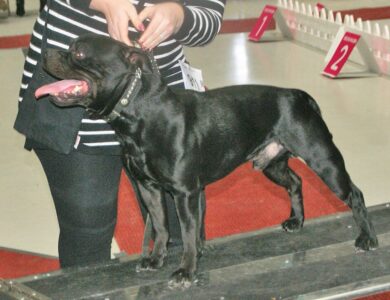
| Staffordshire Bull Terrier | UK (1935) | 13-17 kg | High | Moderate |
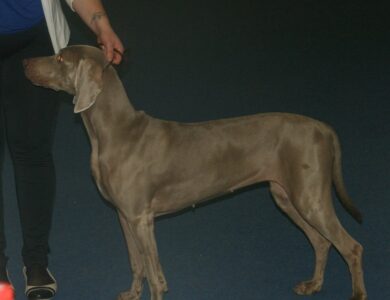
| Weimaraner | Germany (1891) | 30-40 kg | Very high | Moderate |
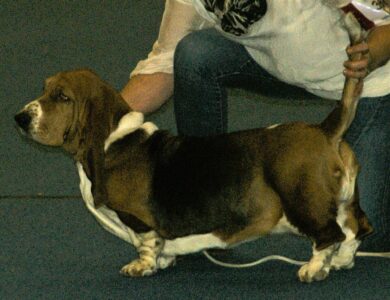
| Basset Hound | France | 25-34 kg | Low | Low |
| Bichon Frise | France/Belgium | ~5 kg | Moderate | Low |
| Maltese | Italy | 3-4 kg | Moderate | Low |
Weight and origin data from published breed standards; energy/guarding levels are general working-breed characterizations, not clinical measurements. See the full breed index for filters by size and origin.
Nutrition and Exercise
Maltese dogs need only moderate exercise, given their role as a dedicated companion breed throughout history. Daily coat grooming is essential to keep the long white coat healthy, and regular cardiac screening is worthwhile given documented heart defect risk in the breed.
10 FAQs
Where does the Maltese come from?
How big does a Maltese get?
What was the Maltese originally bred for?
What health problems are common in Maltese dogs?
Is the Maltese an old breed?
How smart is the Maltese?
Is the Maltese hypoallergenic?
How long do Maltese dogs live?
Are Maltese dogs good family companions?
Is a Maltese good for a first-time owner?
🎥 5 Best YouTube Videos About the Maltese
These videos are embedded directly using YouTube’s own official embed player, in compliance with YouTube’s Terms of Service — we don’t host, own, or claim any credit for this footage. All rights remain with each video’s original creator; click a channel name below to visit their YouTube channel.
Maltese 101 – Everything You Need to Know about this Breed — by Pets Central
Maltese Dog Breed: Everything You Need to Know in 5 Minutes! — by Fluff & Zoomies
12 Things You Should Know Before Getting a Maltese Dog 101 — by Animal Guide
10 Facts You Should Know Before Bringing Home A Maltese | Dogs 101 — by Dog Oracle
The Maltese Dog 101: Care and Characteristics — by Xanti the Maltese
Dog Breed Guide Index: Every Breed We’ve Covered, Filterable by Origin, Size, and Age
Bichon Frise: Complete Breed Guide to Temperament, Health, and Care
AI Dog Breed Photo Identifier: Upload a Photo, Get an Instant AI Match