Cocker Spaniel: Complete Breed Guide to Temperament, Health, and Care

Cocker Spaniel: Complete Breed Guide to Temperament, Health, and Care
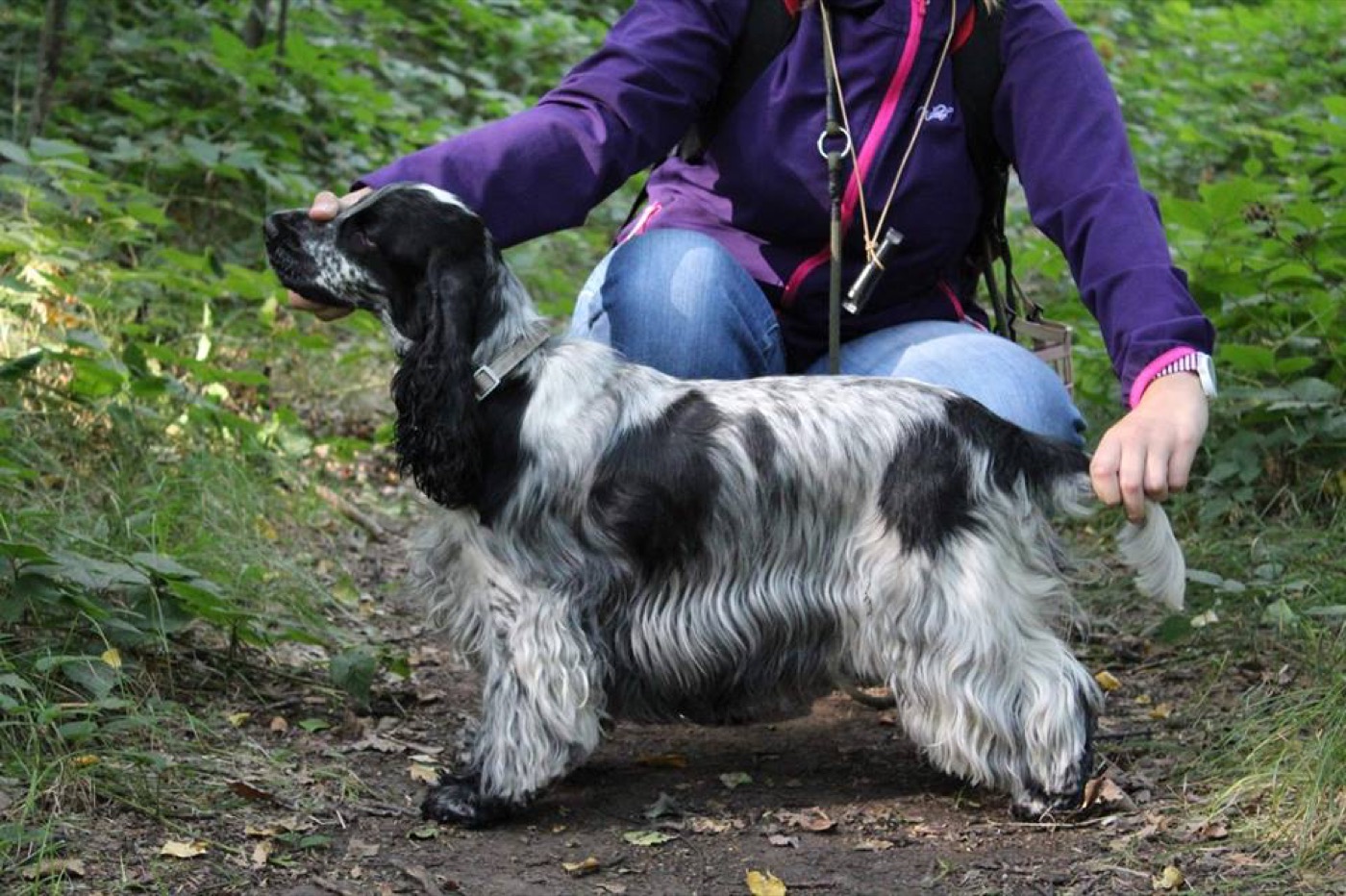
Spaniel-type dogs have appeared in English art and literature for nearly 500 years, but the modern English Cocker Spaniel emerged as a distinct type in the mid-19th century. The Kennel Club published its first stud books in 1874, the Spaniel Club formed in 1885, and the Kennel Club formally separated the Cocker from the larger Springer Spaniel eight years later.
Photo: Vaneska88 / Wikimedia Commons, CC BY-SA 4.0
| Origin | Height | Weight | Lifespan | Energy Level |
|---|---|---|---|---|
| England | Males 39-41 cm · Females 38-39 cm | 13-14.5 kg | ~11.3-13.3 years | High |
Executive Summary
The Cocker Spaniel is active, good-natured, and intelligent, nicknamed the “Merry Spaniel” for its constantly wagging tail. Originally a gun dog used to flush woodcock (the source of its name), it remains eager to please and requires regular socialization to be a well-rounded family companion.
What Owning a Cocker Spaniel Involves
| With training & care | Without it |
|---|---|
| Merry, affectionate family companion, eager to please | Anxiety-driven behavior without enough social engagement |
| Regular dental care manages a documented periodontal risk | Periodontal disease, found in over 20% of the breed |
| Routine ear cleaning prevents chronic infections | Otitis externa from the breed’s long, floppy ears |
| Portion control manages a real predisposition to weight gain | Obesity, documented in nearly 10% of the breed |
3 Real-World Scenarios
- A family choosing an active, good-natured companion: picks the Cocker Spaniel for its documented merry temperament and eagerness to please, well-suited to households with children.
- An owner managing chronic ear infections: adopts a regular ear-cleaning routine, since otitis externa is documented at over 10% prevalence in the breed due to its long, floppy ears.
- A hunter using the breed for its original purpose: relies on the same flushing instinct — pushing woodcock into the open — that gave the breed its name centuries ago.
2 Cocker Spaniel Facts
1. The Cocker Spaniel’s very name comes from its original job: flushing “woodcock” out of cover for hunters, a task the breed was specifically developed and named for.
2. The Kennel Club formally split Cocker Spaniels from the larger Springer Spaniel type in 1893, nineteen years after publishing its first stud books in 1874 — marking the Cocker’s official recognition as a distinct breed.
🐾 Try It: What Breed Does Your Dog’s Description Match?
Click through real physical traits and see how close your dog’s description comes to a Cocker Spaniel or another breed.
🐾 What Breed Is My Dog? Click the traits you see
Try it instantly — no sign-up. Watch the match bar grow as you go.
For fun and general guidance only — not a substitute for a professional breed evaluation or DNA test. Photo credits shown above each result.
How the Cocker Spaniel Compares to Other Breeds We’ve Covered
| Breed | Origin | Male Weight | Energy Level | Guarding Instinct |
|---|---|---|---|---|
| Rottweiler | Germany | 50-60 kg | High | Very high |
| Doberman Pinscher | Germany (1880s) | 40-45 kg | Very high | Very high |
| German Shepherd | Germany (1899) | 30-40 kg | Very high | High |
| Beauceron | France (1587) | 30-45 kg | High | High |
| Golden Retriever | Scotland (1868) | 29-34 kg | High | Low |
| Labrador Retriever | England (1903) | 29-36 kg | High | Low |
| French Bulldog | France (1898) | 9-14 kg | Moderate | Low |
| Poodle (Standard) | Germany/France | 20-32 kg | High | Low |
| Bulldog | England (1875) | ~25 kg | Low | Low |
| Beagle | England (1830s) | 10-11 kg | High | Low |
| Dachshund | Germany (1700s) | 7-15 kg | Moderate | Moderate |
| Yorkshire Terrier | England (1870s) | ≤3.2 kg | Moderate | Low |
| Boxer | Germany (1895) | 30-32 kg | High | High |
| Siberian Husky | Russia (Chukchi) | 20-27 kg | Very high | Low |
| Great Dane | Germany (1878) | 54+ kg | Moderate | Moderate |
| Chihuahua | Mexico | 1-3 kg | High | Low |
| Pug | China | 6-8 kg | Low | Low |
| Border Collie | UK (1893) | 14-25 kg | Very high | Low |
| Australian Shepherd | USA | 16-32 kg | Very high | Moderate |
| Shih Tzu | Tibet/China | 4-7.5 kg | Moderate | Low |
| Cocker Spaniel | England | 13-14.5 kg | High | Low |
| Cavalier King Charles Spaniel | UK (1944) | 5.4-8 kg | Moderate | Low |
| Miniature Schnauzer | Germany | 4-8 kg | Moderate | Moderate |
| Pomeranian | Germany/Poland | 1.4-3.2 kg | High | Low |
| Shetland Sheepdog | Scotland (1909) | ~9-11 kg | High | Moderate |
| Bernese Mountain Dog | Switzerland (1912) | 36-55 kg | Moderate | Moderate |
| Newfoundland | Canada | 65-80 kg | Moderate | Low |
| Akita | Japan (1931) | 27-59 kg | Moderate | High |
| Alaskan Malamute | USA (Alaska) | 34-39 kg | Very high | Low |
| Bull Terrier | England | Unstandardized | High | Moderate |
| Staffordshire Bull Terrier | UK (1935) | 13-17 kg | High | Moderate |
| Weimaraner | Germany (1891) | 30-40 kg | Very high | Moderate |
| Basset Hound | France | 25-34 kg | Low | Low |
| Bichon Frise | France/Belgium | ~5 kg | Moderate | Low |
| Maltese | Italy | 3-4 kg | Moderate | Low |
Weight and origin data from published breed standards; energy/guarding levels are general working-breed characterizations, not clinical measurements. See the full breed index for filters by size and origin.
Nutrition and Exercise
Cocker Spaniels need substantial daily exercise to match their gun-dog heritage, along with strict portion control given the breed’s documented obesity risk (nearly 10% prevalence). Regular ear cleaning and dental care address two of the breed’s most common health issues directly.
10 FAQs
Where does the Cocker Spaniel come from?
How big does a Cocker Spaniel get?
Why is it called a Cocker Spaniel?
What health problems are common in Cocker Spaniels?
Are Cocker Spaniels good family dogs?
Why do Cocker Spaniels get ear infections so often?
Do Cocker Spaniels need a lot of exercise?
How long do Cocker Spaniels live?
Is a Cocker Spaniel good for a first-time owner?
What was the Cocker Spaniel originally bred for?
🎥 5 Best YouTube Videos About the Cocker Spaniel
These videos are embedded directly using YouTube’s own official embed player, in compliance with YouTube’s Terms of Service — we don’t host, own, or claim any credit for this footage. All rights remain with each video’s original creator; click a channel name below to visit their YouTube channel.
Cocker Spaniel Dog Breed Guide | Dogs 101 – Cocker Spaniel — by Smart Dog Lover
Dogs 101 – American Cocker Spaniel – Top Dog Facts — by Brooklyns Corner
Dogs 101 – Cocker Spaniel — by mightybooshhorse100
Cocker Spaniel Dogs 101 – Everything You Need to Know — by Smart Dog Lover
Cocker Spaniel – Dog Breed Information — by Dog World
Dog Breed Guide Index: Every Breed We’ve Covered, Filterable by Origin, Size, and Age
Cavalier King Charles Spaniel: Complete Breed Guide to Temperament, Health, and Care
AI Dog Breed Photo Identifier: Upload a Photo, Get an Instant AI Match