Bull Terrier: Complete Breed Guide to Temperament, Health, and Care

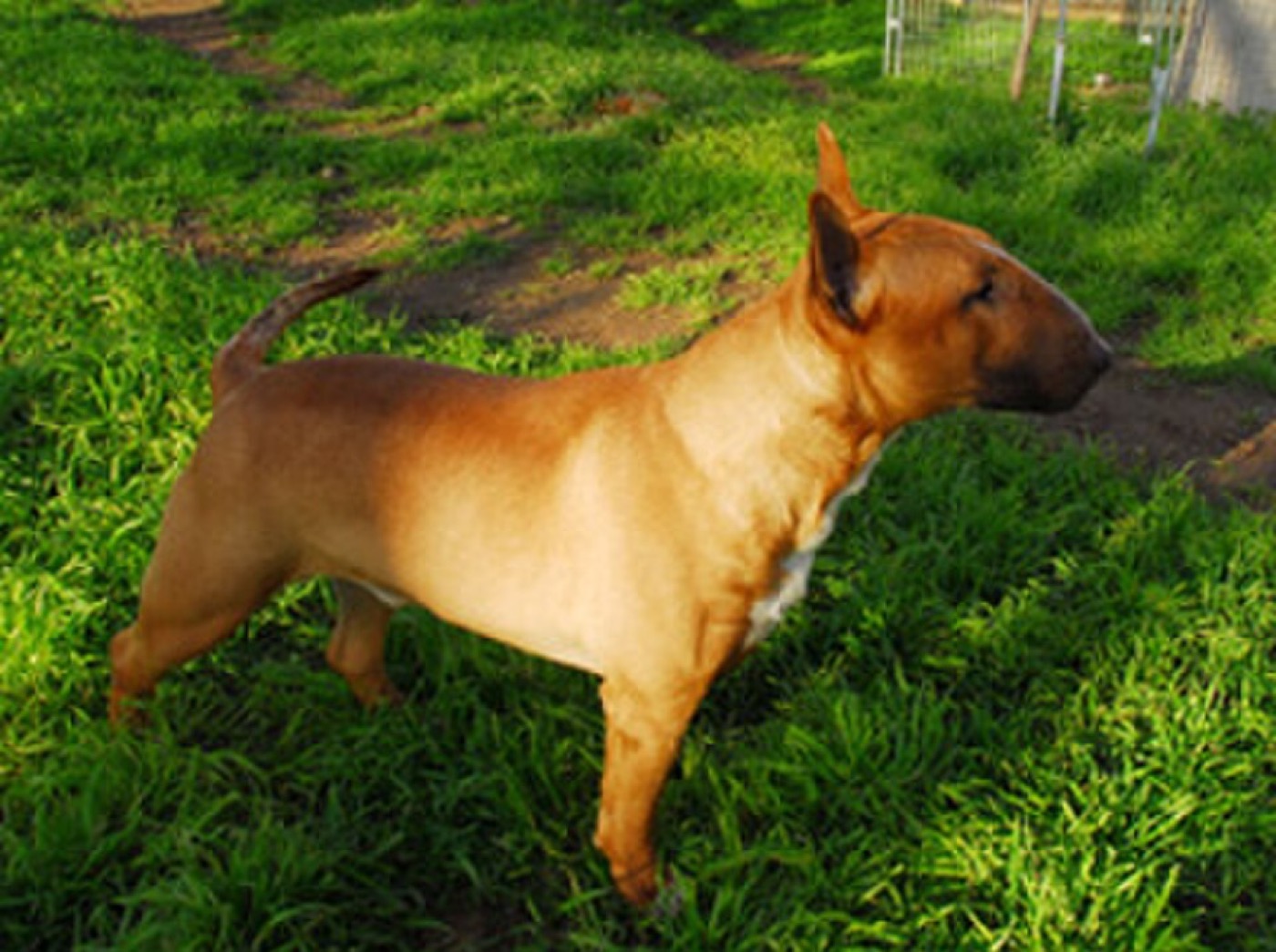
Bull Terrier: Complete Breed Guide to Temperament, Health, and Care
The Bull Terrier, instantly recognizable for its distinctive egg-shaped head, was developed in mid-19th-century England when James Hinks began breeding bull-and-terrier crosses with English White Terriers for a cleaner appearance. The first dog recognized as a modern Bull Terrier was “Lord Gladiator,” from 1917.
Photo: Blake Ovard / Wikimedia Commons, CC BY-SA 3.0
| Origin | Height | Weight | Lifespan | Energy Level |
|---|---|---|---|---|
| England | No breed-standard limit | No breed-standard limit | ~10-15 years (12 years average, 2024 UK study) | High |
Executive Summary
The Bull Terrier is courageous, fun-loving, and particularly good with people, with a distinctive egg-shaped head unlike any other breed. Originally bred for vermin control and blood sports, the modern Bull Terrier channels its spirited, independent personality into an affectionate, if sometimes stubborn, companion.
What Owning a Bull Terrier Involves
| With training & care | Without it |
|---|---|
| Courageous, fun-loving companion good with people | Independent, stubborn behavior without consistent training |
| Hearing testing in white-coated puppies catches deafness | Deafness, documented in 20.4% of pure white Bull Terriers |
| Early socialization with other animals | Difficulty with other animals without early socialization |
| Skin care to manage insect-bite allergy sensitivity | Skin allergy flare-ups from insect bites |
3 Real-World Scenarios
- A breeder screening white-coated puppies: arranges hearing tests given the documented 20.4% deafness rate in pure white Bull Terriers, compared to just 1.3% in colored dogs.
- A family wanting a courageous, people-focused companion: picks the Bull Terrier for its documented affinity for people, while committing to early socialization with other animals.
- An owner researching the breed’s distinctive look: learns the egg-shaped head is a deliberately bred trait unique to this breed, traced to James Hinks’ 19th-century breeding program.
2 Bull Terrier Facts
1. The Bull Terrier’s unmistakable egg-shaped head is not accidental — it was a deliberate breeding goal by James Hinks in the 1800s, who crossed bull-and-terrier dogs with English White Terriers specifically for a cleaner, distinctive profile.
2. Deafness is documented at a striking 20.4% in pure white Bull Terriers, compared to just 1.3% in colored individuals of the same breed — a dramatic, well-documented coat-color-linked health difference.
🐾 Try It: What Breed Does Your Dog’s Description Match?
Click through real physical traits and see how close your dog’s description comes to a Bull Terrier or another breed.
🐾 What Breed Is My Dog? Click the traits you see
Try it instantly — no sign-up. Watch the match bar grow as you go.
For fun and general guidance only — not a substitute for a professional breed evaluation or DNA test. Photo credits shown above each result.
How the Bull Terrier Compares to Other Breeds We’ve Covered
| Breed | Origin | Male Weight | Energy Level | Guarding Instinct |
|---|---|---|---|---|
| Rottweiler | Germany | 50-60 kg | High | Very high |
| Doberman Pinscher | Germany (1880s) | 40-45 kg | Very high | Very high |
| German Shepherd | Germany (1899) | 30-40 kg | Very high | High |
| Beauceron | France (1587) | 30-45 kg | High | High |
| Golden Retriever | Scotland (1868) | 29-34 kg | High | Low |
| Labrador Retriever | England (1903) | 29-36 kg | High | Low |
| French Bulldog | France (1898) | 9-14 kg | Moderate | Low |
| Poodle (Standard) | Germany/France | 20-32 kg | High | Low |
| Bulldog | England (1875) | ~25 kg | Low | Low |
| Beagle | England (1830s) | 10-11 kg | High | Low |
| Dachshund | Germany (1700s) | 7-15 kg | Moderate | Moderate |
| Yorkshire Terrier | England (1870s) | ≤3.2 kg | Moderate | Low |
| Boxer | Germany (1895) | 30-32 kg | High | High |
| Siberian Husky | Russia (Chukchi) | 20-27 kg | Very high | Low |
| Great Dane | Germany (1878) | 54+ kg | Moderate | Moderate |
| Chihuahua | Mexico | 1-3 kg | High | Low |
| Pug | China | 6-8 kg | Low | Low |
| Border Collie | UK (1893) | 14-25 kg | Very high | Low |
| Australian Shepherd | USA | 16-32 kg | Very high | Moderate |
| Shih Tzu | Tibet/China | 4-7.5 kg | Moderate | Low |
| Cocker Spaniel | England | 13-14.5 kg | High | Low |
| Cavalier King Charles Spaniel | UK (1944) | 5.4-8 kg | Moderate | Low |
| Miniature Schnauzer | Germany | 4-8 kg | Moderate | Moderate |
| Pomeranian | Germany/Poland | 1.4-3.2 kg | High | Low |
| Shetland Sheepdog | Scotland (1909) | ~9-11 kg | High | Moderate |
| Bernese Mountain Dog | Switzerland (1912) | 36-55 kg | Moderate | Moderate |
| Newfoundland | Canada | 65-80 kg | Moderate | Low |
| Akita | Japan (1931) | 27-59 kg | Moderate | High |
| Alaskan Malamute | USA (Alaska) | 34-39 kg | Very high | Low |
| Bull Terrier | England | Unstandardized | High | Moderate |
| Staffordshire Bull Terrier | UK (1935) | 13-17 kg | High | Moderate |
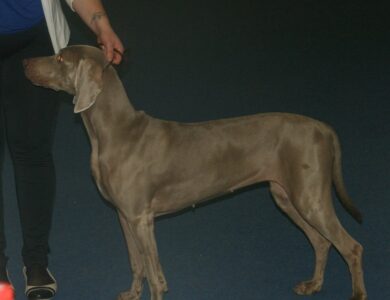
| Weimaraner | Germany (1891) | 30-40 kg | Very high | Moderate |
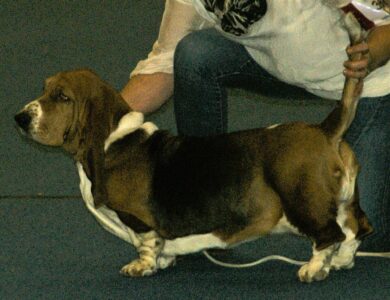
| Basset Hound | France | 25-34 kg | Low | Low |
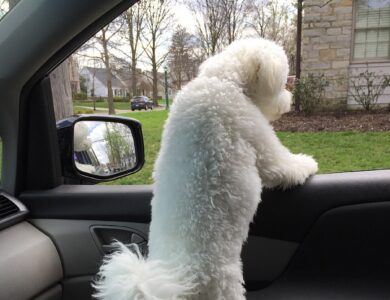
| Bichon Frise | France/Belgium | ~5 kg | Moderate | Low |
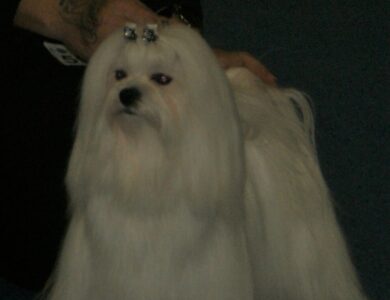
| Maltese | Italy | 3-4 kg | Moderate | Low |
Weight and origin data from published breed standards; energy/guarding levels are general working-breed characterizations, not clinical measurements. See the full breed index for filters by size and origin.
Nutrition and Exercise
Bull Terriers need substantial daily exercise to match their spirited, high-energy temperament. Given the documented skin allergy sensitivity in the breed, especially to insect bites, many owners work with their vet on preventive skin care during warmer months.
10 FAQs
Where does the Bull Terrier come from?
What is distinctive about the Bull Terrier’s appearance?
Are white Bull Terriers more likely to be deaf?
What was the Bull Terrier originally bred for?
What other health problems affect Bull Terriers?
Are Bull Terriers good with people?
How long do Bull Terriers live?
Do Bull Terriers get along with other animals?
Is a Bull Terrier good for a first-time owner?
How does the Bull Terrier differ from the Staffordshire Bull Terrier?
🎥 5 Best YouTube Videos About the Bull Terrier
These videos are embedded directly using YouTube’s own official embed player, in compliance with YouTube’s Terms of Service — we don’t host, own, or claim any credit for this footage. All rights remain with each video’s original creator; click a channel name below to visit their YouTube channel.
Bull Terrier 101 – The Loyal and Athletic Breed with a Unique Personality — by Animals101
Dogs 101 – BULL TERRIER – Top Dog Facts About the Bull Terrier — by Brooklyns Corner
BULL TERRIER 101! Everything You Need To Know About Owning a Bull Terrier Puppy — by Will Atherton Canine Show
Dog 101 – Bull Terrier — by Evil Lord Gaming
Dog Breed Video: Bull Terrier — by Naturally Happy Dogs
Dog Breed Guide Index: Every Breed We’ve Covered, Filterable by Origin, Size, and Age
Staffordshire Bull Terrier: Complete Breed Guide to Temperament, Health, and Care
AI Dog Breed Photo Identifier: Upload a Photo, Get an Instant AI Match