Poodle: Complete Breed Guide to Temperament, Health, and Care

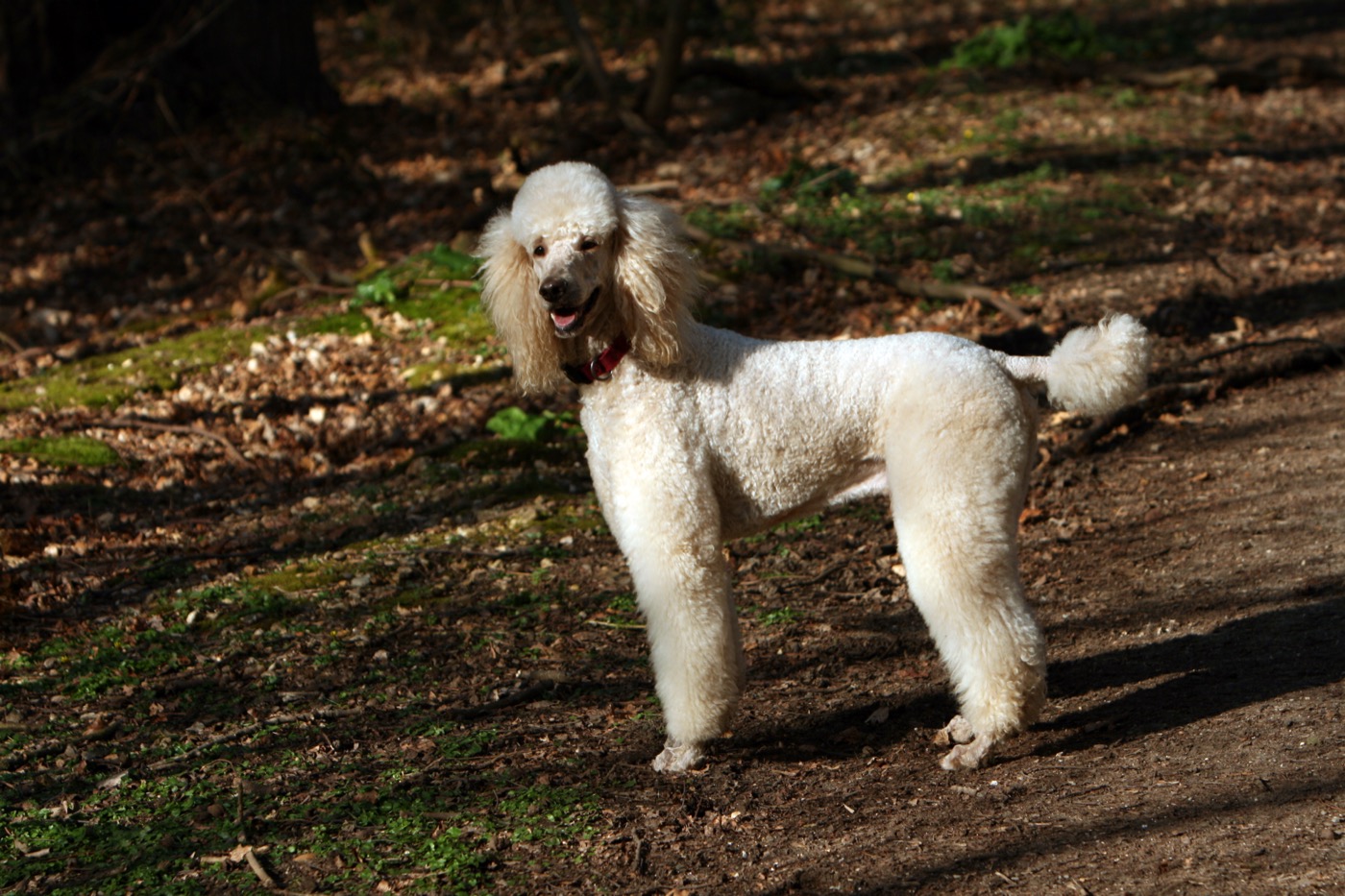
Poodle: Complete Breed Guide to Temperament, Health, and Care
The Poodle‘s origin is genuinely disputed among cynologists — most trace it to Germany’s water dogs of the Middle Ages (the name comes from the Low German “puddeln,” to splash), while the FCI’s official standard credits France. Either way, it became France’s national dog and one of the most consistently intelligent breeds ever studied, ranked second in canine intelligence research behind only the Border Collie (a guide we’re still building toward).
Photo: John Leslie / Wikimedia Commons, CC BY 2.0
| Origin | Height | Weight | Lifespan | Energy Level |
|---|---|---|---|---|
| Germany or France (disputed) | Standard: 45–62 cm | Standard: 20–32 kg | 10–18 years (smaller varieties live longer) | High |
Executive Summary
The Poodle is highly intelligent, energetic, and sociable — originally a waterfowl retriever, its elaborate show clip actually descends from a functional trim that kept joints warm in cold water while reducing drag elsewhere. Shyness is considered a serious fault in the breed standard.
What Owning a Poodle Involves
| With training & care | Without it |
|---|---|
| Highly trainable, quick-learning companion | Under-stimulated intelligence turning into anxiety or barking |
| Regular grooming keeps the non-shedding coat healthy | Matting and skin issues from neglected coat care |
| Genetic screening reduces hereditary disease risk | Undiagnosed sebaceous adenitis, Addison’s disease, or hypothyroidism |
| Sociable temperament suits an engaged household | Shyness or anxiety if under-socialized, a breed-standard fault |
3 Real-World Scenarios
- A prospective owner with allergies: considers the Poodle for its low-shedding coat, though researches that “hypoallergenic” is a matter of degree, not an absolute guarantee.
- A trainer selecting a working or performance-sport dog: leans on the breed’s documented ranking as the second most intelligent dog breed in canine cognition research.
- A breeder screening for hereditary disease: tests against the more than 50 documented hereditary disorders known in the breed, including sebaceous adenitis and Addison’s disease.
2 Poodle Facts
1. The Poodle’s elaborate “Continental clip” show trim isn’t decorative in origin — it descends from a functional cut German and French hunters used to protect the joints and vital organs from cold water while leaving the legs unencumbered for swimming.
2. The breed’s country of origin remains formally disputed: most cynologists point to Germany’s medieval water dogs, while the FCI’s official standard attributes the breed to France, where it became the national dog.
🐾 Try It: What Breed Does Your Dog’s Description Match?
Click through real physical traits and see how close your dog’s description comes to a Poodle or another breed.
🐾 What Breed Is My Dog? Click the traits you see
Try it instantly — no sign-up. Watch the match bar grow as you go.
For fun and general guidance only — not a substitute for a professional breed evaluation or DNA test. Photo credits shown above each result.
How the Poodle Compares to Other Breeds We’ve Covered
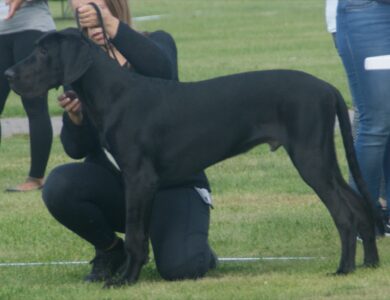
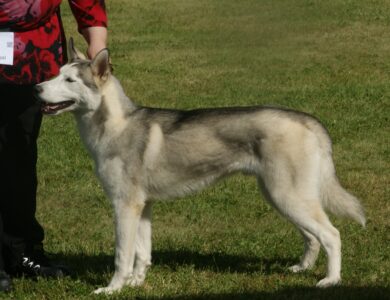
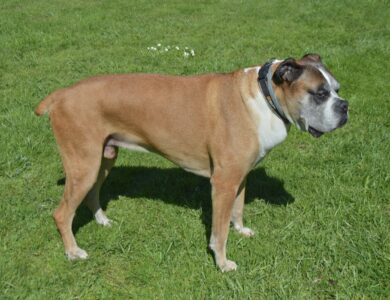
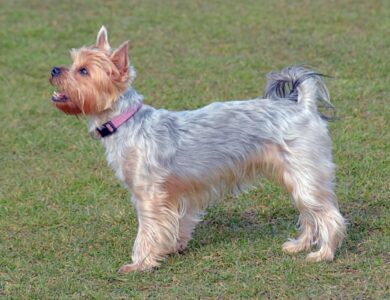
| Breed | Origin | Male Weight | Energy Level | Guarding Instinct |
|---|---|---|---|---|
| Rottweiler | Germany | 50-60 kg | High | Very high |
| Doberman Pinscher | Germany (1880s) | 40-45 kg | Very high | Very high |
| German Shepherd | Germany (1899) | 30-40 kg | Very high | High |
| Beauceron | France (1587) | 30-45 kg | High | High |
| Golden Retriever | Scotland (1868) | 29-34 kg | High | Low |
| Labrador Retriever | England (1903) | 29-36 kg | High | Low |
| French Bulldog | France (1898) | 9-14 kg | Moderate | Low |
| Poodle (Standard) | Germany/France | 20-32 kg | High | Low |
| Bulldog | England (1875) | ~25 kg | Low | Low |
| Beagle | England (1830s) | 10-11 kg | High | Low |
| Dachshund | Germany (1700s) | 7-15 kg | Moderate | Moderate |
| Yorkshire Terrier | England (1870s) | ≤3.2 kg | Moderate | Low |
| Boxer | Germany (1895) | 30-32 kg | High | High |
| Siberian Husky | Russia (Chukchi) | 20-27 kg | Very high | Low |
| Great Dane | Germany (1878) | 54+ kg | Moderate | Moderate |
Weight and origin data from published breed standards; energy/guarding levels are general working-breed characterizations, not clinical measurements. See the full breed index for filters by size and origin.
Nutrition and Exercise
Standard Poodles need substantial daily exercise matched to their working retriever heritage, along with regular professional grooming, since the curly non-shedding coat mats easily if neglected. Genetic screening for known hereditary conditions is recommended before breeding.
10 FAQs
Where does the Poodle come from?
How big does a Standard Poodle get?
Are Poodles hypoallergenic?
How intelligent are Poodles?
What health problems are common in Poodles?
What was the Poodle originally bred for?
Do Poodles need a lot of exercise?
Why do Poodles get the elaborate show haircut?
Are Poodles good family dogs?
What sizes do Poodles come in?
Dog Breed Guide Index: Every Breed We’ve Covered, Filterable by Origin, Size, and Age
Golden Retriever: Complete Breed Guide to Temperament, Health, and Care
AI Dog Breed Photo Identifier: Upload a Photo, Get an Instant AI Match