Bulldog: Complete Breed Guide to Temperament, Health, and Care

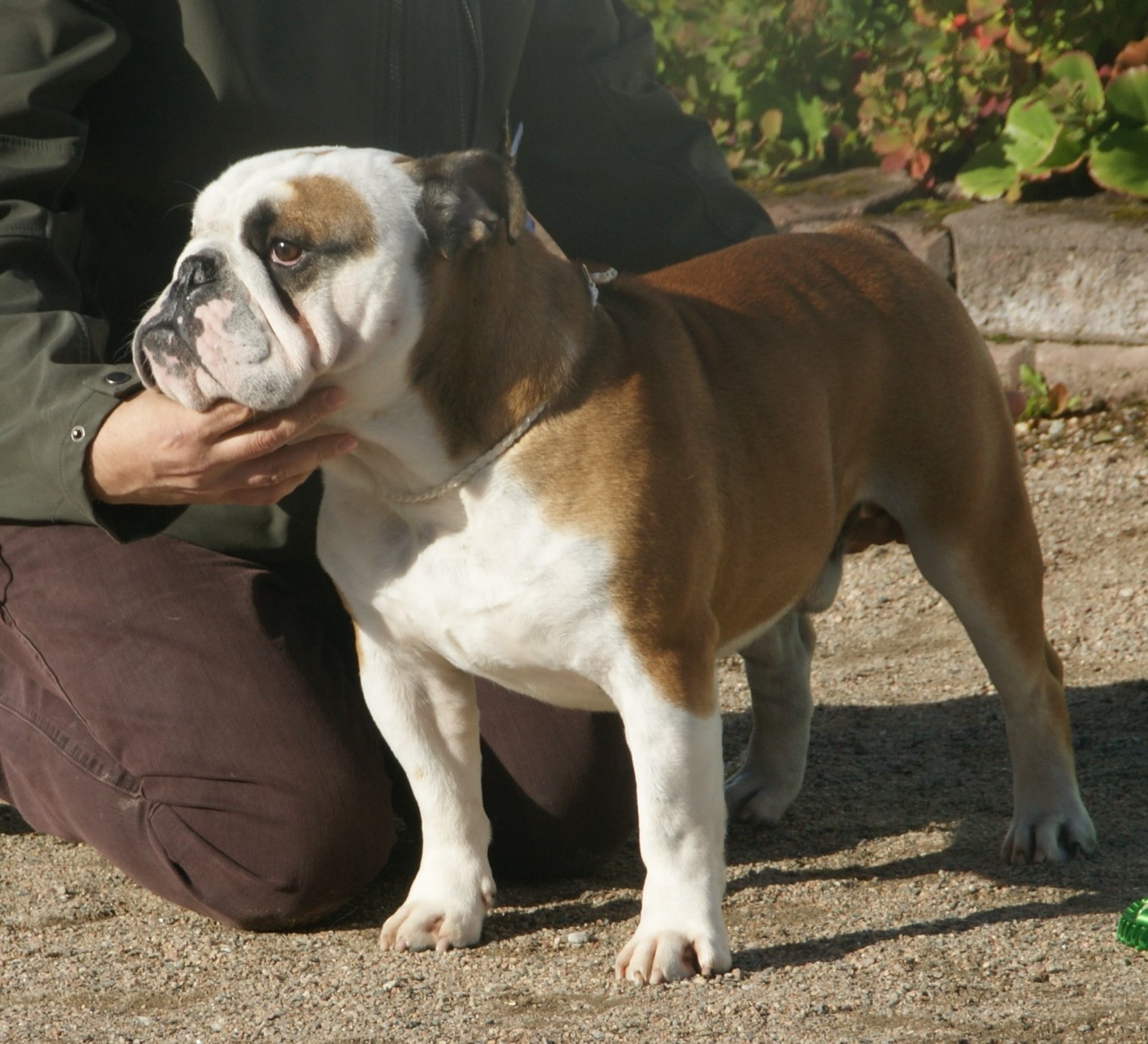
Bulldog: Complete Breed Guide to Temperament, Health, and Care
The Bulldog descends from the Old English Bulldog, bred for bull-baiting until the practice was outlawed in England in 1835. Breeders then reshaped its temperament into a gentle companion while the Bulldog Club (England) formalized the breed standard in 1875 and formed in 1878. The result is one of the calmest breeds by temperament and one of the most health-challenged by body structure — a similar tradeoff to the French Bulldog.
Photo: Canarian / Wikimedia Commons, CC BY-SA 4.0
| Origin | Height | Weight | Lifespan | Energy Level |
|---|---|---|---|---|
| England (standard 1875) | Not standardized precisely | Males ~25 kg · Females ~23 kg | ~9.8 years (2024 UK study) | Low |
Executive Summary
The Bulldog is famously calm, courageous, and good-natured — the American Kennel Club describes its disposition as “equable and kind, resolute, and courageous, not vicious or aggressive.” Its brachycephalic build, however, brings some of the most well-documented health challenges of any popular breed.
What Owning a Bulldog Involves
| With training & care | Without it |
|---|---|
| Calm, affectionate companion good with children | Same low activity tolerance can mask breathing distress |
| Regular vet monitoring of hips and airway | Hip dysplasia, documented in 73.9% of tested dogs |
| Breeder screening reduces whelping complications | Over 80% of litters require a Caesarean section |
| Skin-fold cleaning prevents dermatitis | Skin fold dermatitis from neglected fold care |
3 Real-World Scenarios
- A family choosing a calm, low-energy companion: picks the Bulldog for its documented gentle, courageous-but-not-aggressive temperament.
- A prospective owner budgeting for veterinary costs: researches that hip dysplasia was documented in 73.9% of tested Bulldogs, and plans for above-average orthopedic care.
- A breeder managing whelping risk: plans for a likely Caesarean section, since over 80% of Bulldog litters require one due to the breed’s broad-headed proportions.
2 Bulldog Facts
1. The modern Bulldog’s calm temperament is the product of deliberate re-breeding: after bull-baiting was outlawed in England in 1835, breeders spent decades selecting for gentleness in a breed originally bred for gripping and pinning bulls by the nose.
2. A hip dysplasia study found the condition in 73.9% of tested Bulldogs, one of the highest documented rates of any breed, tied to the breed’s characteristic broad, heavy-boned structure.
🐾 Try It: What Breed Does Your Dog’s Description Match?
Click through real physical traits and see how close your dog’s description comes to a Bulldog or another breed.
🐾 What Breed Is My Dog? Click the traits you see
Try it instantly — no sign-up. Watch the match bar grow as you go.
For fun and general guidance only — not a substitute for a professional breed evaluation or DNA test. Photo credits shown above each result.
How the Bulldog Compares to Other Breeds We’ve Covered
| Breed | Origin | Male Weight | Energy Level | Guarding Instinct |
|---|---|---|---|---|
| Rottweiler | Germany | 50-60 kg | High | Very high |
| Doberman Pinscher | Germany (1880s) | 40-45 kg | Very high | Very high |
| German Shepherd | Germany (1899) | 30-40 kg | Very high | High |
| Beauceron | France (1587) | 30-45 kg | High | High |
| Golden Retriever | Scotland (1868) | 29-34 kg | High | Low |
| Labrador Retriever | England (1903) | 29-36 kg | High | Low |
| French Bulldog | France (1898) | 9-14 kg | Moderate | Low |
| Poodle (Standard) | Germany/France | 20-32 kg | High | Low |
| Bulldog | England (1875) | ~25 kg | Low | Low |
| Beagle | England (1830s) | 10-11 kg | High | Low |
| Dachshund | Germany (1700s) | 7-15 kg | Moderate | Moderate |
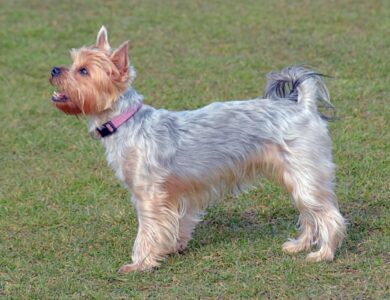
| Yorkshire Terrier | England (1870s) | ≤3.2 kg | Moderate | Low |
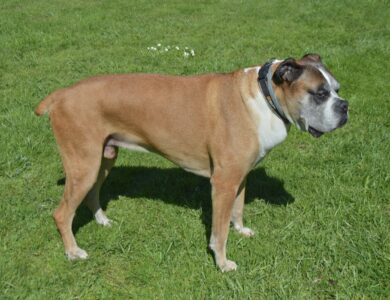
| Boxer | Germany (1895) | 30-32 kg | High | High |
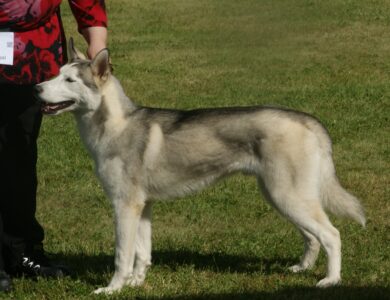
| Siberian Husky | Russia (Chukchi) | 20-27 kg | Very high | Low |
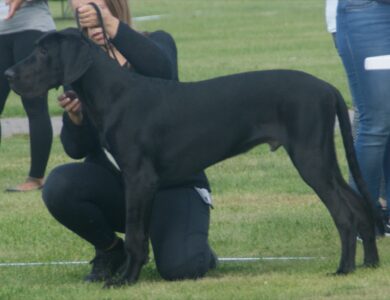
| Great Dane | Germany (1878) | 54+ kg | Moderate | Moderate |
Weight and origin data from published breed standards; energy/guarding levels are general working-breed characterizations, not clinical measurements. See the full breed index for filters by size and origin.
Nutrition and Exercise
Bulldogs need only light daily exercise, but heat and exertion must be carefully managed given the breed’s documented brachycephalic airway restriction. Skin folds need regular cleaning to prevent dermatitis, and weight control matters given the breed’s low activity tolerance.
10 FAQs
Where does the Bulldog come from?
How big does a Bulldog get?
Why do Bulldogs have breathing problems?
Do Bulldogs need a C-section to give birth?
How long do Bulldogs live?
Is hip dysplasia common in Bulldogs?
Are Bulldogs good family dogs?
What was the Bulldog originally bred for?
How does a Bulldog compare to a French Bulldog?
Is the Bulldog good for a first-time owner?
Dog Breed Guide Index: Every Breed We’ve Covered, Filterable by Origin, Size, and Age
French Bulldog: Complete Breed Guide to Temperament, Health, and Care
AI Dog Breed Photo Identifier: Upload a Photo, Get an Instant AI Match