Australian Shepherd: Complete Breed Guide to Temperament, Health, and Care

Australian Shepherd: Complete Breed Guide to Temperament, Health, and Care
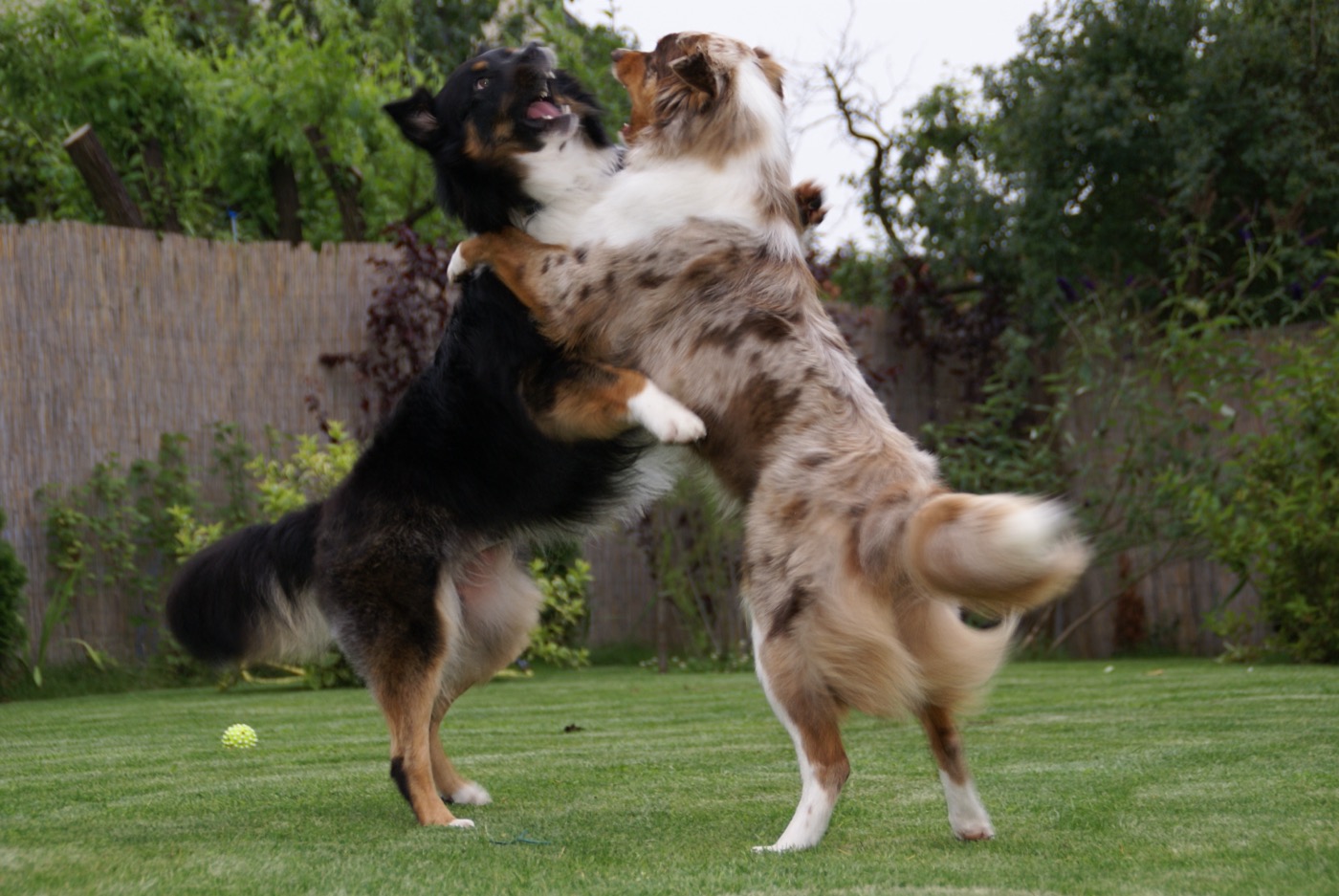
Despite its name, the Australian Shepherd was developed in 19th-century California, descended from Spanish pastoral dogs brought to North America as early as the 1500s, combined with collies that arrived alongside sheep imported from Australia and New Zealand — which is how the breed got its misleading name. It has no real origin in Australia itself.
Photo: Photo (CC BY-SA 3.0): Joeylena / Wikimedia Commons
| Origin | Height | Weight | Lifespan | Energy Level |
|---|---|---|---|---|
| United States (California) | 46-58 cm | 16-32 kg | ~13.7 years | Very High |
Executive Summary
The Australian Shepherd is intelligent, active, and loyal, with a strong protective streak and deep herding instinct despite its American origin. It needs substantial daily exercise and a real job or task — without it, the breed is prone to destructive behavior.
What Owning a Australian Shepherd Involves
| With training & care | Without it |
|---|---|
| Intelligent, protective family companion with a job to do | Destructive behavior from unmet exercise and mental needs |
| Genetic MDR1 testing avoids dangerous drug reactions | Severe reaction to certain medications in MDR1-sensitive dogs |
| Routine eye screening catches hereditary cataracts early | Undiagnosed vision problems, the top owner-reported issue |
| Structured herding or dog-sport work channels energy well | Destructive or over-the-top herding behavior toward kids/pets |
3 Real-World Scenarios
- A rancher managing cattle in the American West: relies on the breed’s documented history as a working herding dog for California and Western U.S. ranchers, despite the misleading “Australian” name.
- An owner researching medication safety: learns about the breed’s documented MDR1 gene sensitivity and gets genetic testing before certain drugs are prescribed.
- A family choosing an active dog-sport partner: picks the Australian Shepherd for its intelligence and trainability, common in agility and herding trial competitors.
2 Australian Shepherd Facts
1. Despite its name, genuine historical research traces the Australian Shepherd’s development to 19th-century California, not Australia — the name comes from collies that arrived in the U.S. alongside sheep imported from Australia, not from the breed’s actual place of origin.
2. The breed carries a documented sensitivity to the MDR1 gene mutation, which can cause severe, sometimes fatal reactions to certain common medications — genetic testing is available and recommended before prescribing affected drugs.
🐾 Try It: What Breed Does Your Dog’s Description Match?
Click through real physical traits and see how close your dog’s description comes to a Australian Shepherd or another breed.
🐾 What Breed Is My Dog? Click the traits you see
Try it instantly — no sign-up. Watch the match bar grow as you go.
For fun and general guidance only — not a substitute for a professional breed evaluation or DNA test. Photo credits shown above each result.
How the Australian Shepherd Compares to Other Breeds We’ve Covered
| Breed | Origin | Male Weight | Energy Level | Guarding Instinct |
|---|---|---|---|---|
| Rottweiler | Germany | 50-60 kg | High | Very high |
| Doberman Pinscher | Germany (1880s) | 40-45 kg | Very high | Very high |
| German Shepherd | Germany (1899) | 30-40 kg | Very high | High |
| Beauceron | France (1587) | 30-45 kg | High | High |
| Golden Retriever | Scotland (1868) | 29-34 kg | High | Low |
| Labrador Retriever | England (1903) | 29-36 kg | High | Low |
| French Bulldog | France (1898) | 9-14 kg | Moderate | Low |
| Poodle (Standard) | Germany/France | 20-32 kg | High | Low |
| Bulldog | England (1875) | ~25 kg | Low | Low |
| Beagle | England (1830s) | 10-11 kg | High | Low |
| Dachshund | Germany (1700s) | 7-15 kg | Moderate | Moderate |
| Yorkshire Terrier | England (1870s) | ≤3.2 kg | Moderate | Low |
| Boxer | Germany (1895) | 30-32 kg | High | High |
| Siberian Husky | Russia (Chukchi) | 20-27 kg | Very high | Low |
| Great Dane | Germany (1878) | 54+ kg | Moderate | Moderate |
| Chihuahua | Mexico | 1-3 kg | High | Low |
| Pug | China | 6-8 kg | Low | Low |
| Border Collie | UK (1893) | 14-25 kg | Very high | Low |
| Australian Shepherd | USA | 16-32 kg | Very high | Moderate |
| Shih Tzu | Tibet/China | 4-7.5 kg | Moderate | Low |
| Cocker Spaniel | England | 13-14.5 kg | High | Low |
| Cavalier King Charles Spaniel | UK (1944) | 5.4-8 kg | Moderate | Low |
| Miniature Schnauzer | Germany | 4-8 kg | Moderate | Moderate |
| Pomeranian | Germany/Poland | 1.4-3.2 kg | High | Low |
| Shetland Sheepdog | Scotland (1909) | ~9-11 kg | High | Moderate |
| Bernese Mountain Dog | Switzerland (1912) | 36-55 kg | Moderate | Moderate |
| Newfoundland | Canada | 65-80 kg | Moderate | Low |
| Akita | Japan (1931) | 27-59 kg | Moderate | High |
| Alaskan Malamute | USA (Alaska) | 34-39 kg | Very high | Low |
| Bull Terrier | England | Unstandardized | High | Moderate |
| Staffordshire Bull Terrier | UK (1935) | 13-17 kg | High | Moderate |
| Weimaraner | Germany (1891) | 30-40 kg | Very high | Moderate |
| Basset Hound | France | 25-34 kg | Low | Low |
| Bichon Frise | France/Belgium | ~5 kg | Moderate | Low |
| Maltese | Italy | 3-4 kg | Moderate | Low |
Weight and origin data from published breed standards; energy/guarding levels are general working-breed characterizations, not clinical measurements. See the full breed index for filters by size and origin.
Nutrition and Exercise
Australian Shepherds need substantial daily physical and mental exercise — herding work, agility, or structured training suits their working heritage well. Owners should be aware of the documented MDR1 gene sensitivity in the breed before any new medication is introduced.
10 FAQs
Is the Australian Shepherd actually from Australia?
How big does an Australian Shepherd get?
What was the Australian Shepherd originally bred for?
What health problems are common in Australian Shepherds?
What is MDR1 gene sensitivity?
Do Australian Shepherds need a lot of exercise?
Are Australian Shepherds good family dogs?
How long do Australian Shepherds live?
Is an Australian Shepherd good for a first-time owner?
How does the Australian Shepherd compare to the Border Collie?
🎥 5 Best YouTube Videos About the Australian Shepherd
These videos are embedded directly using YouTube’s own official embed player, in compliance with YouTube’s Terms of Service — we don’t host, own, or claim any credit for this footage. All rights remain with each video’s original creator; click a channel name below to visit their YouTube channel.
Australian Shepherd 101 – Feeding, Grooming, Training and Health Care — by The Animals Influence
Australian Shepherd 101: What You NEED To Know About Aussies! — by Dog Breeds 101
Australian Shepherd 101: Your Guide to The Energetic And Loyal Aussie! — by All Things Dogs
Australian Shepherd | Dogs 101 — by Dog Lore
Australian Shepherd Dog Breed Guide: Facts, Training & Puppy Tips — by Rover
Dog Breed Guide Index: Every Breed We’ve Covered, Filterable by Origin, Size, and Age
Border Collie: Complete Breed Guide to Temperament, Health, and Care
AI Dog Breed Photo Identifier: Upload a Photo, Get an Instant AI Match