Bichon Frise: Complete Breed Guide to Temperament, Health, and Care

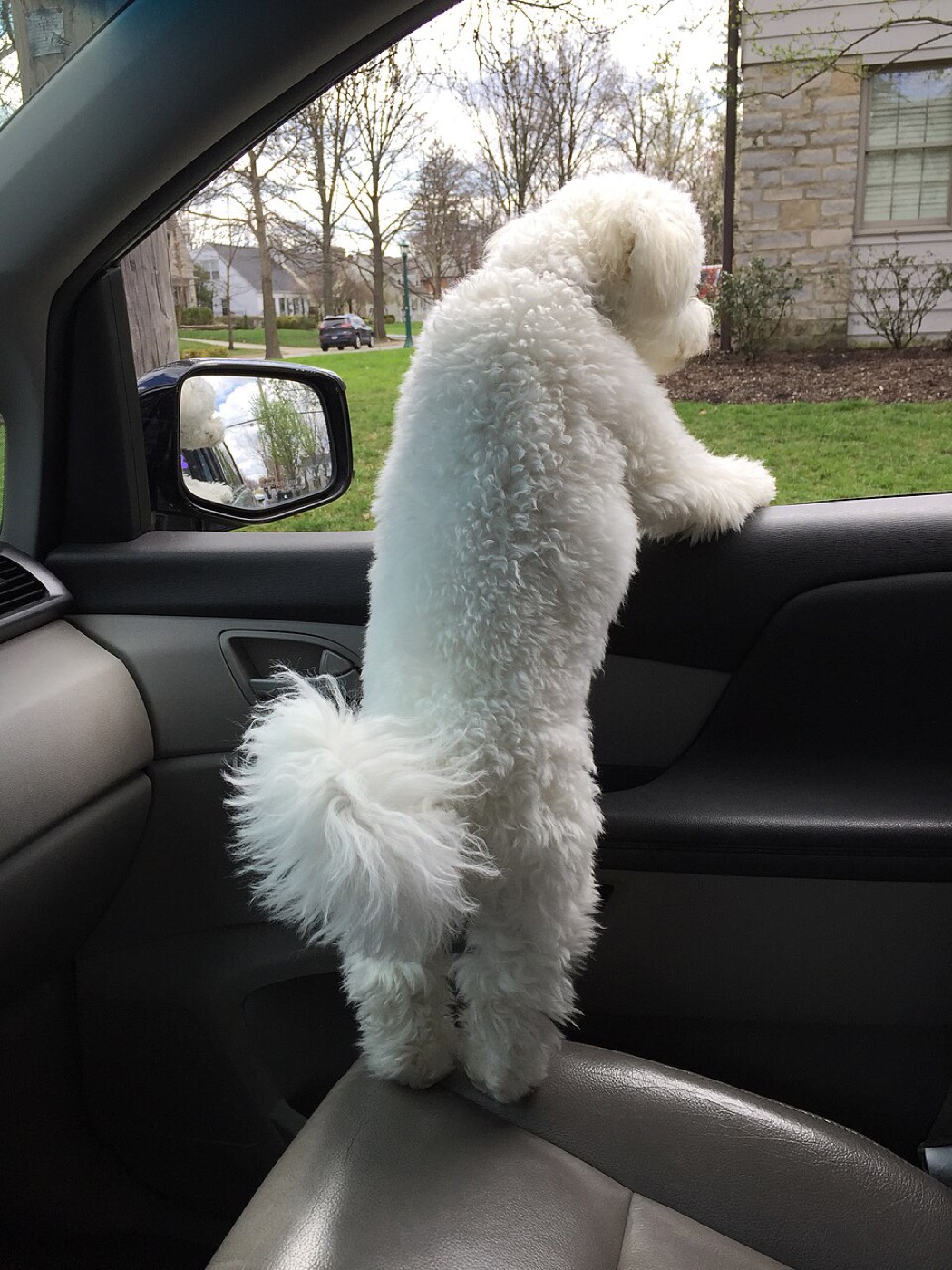
Bichon Frise: Complete Breed Guide to Temperament, Health, and Care
The Bichon Frise traces its roots to the Canary Islands, where Spanish seamen introduced the breed’s ancestors before Italian sailors rediscovered them in the 14th century and brought them to continental Europe. The breed entered the royal courts of Spain, Italy, and France starting in the 13th century, and was officially recognized by the Fédération Cynologique Internationale in October 1959.
Photo: Photo by Julia (CC BY-SA 4.0) / Wikimedia Commons
| Origin | Height | Weight | Lifespan | Energy Level |
|---|---|---|---|---|
| France/Belgium (Canary Islands roots) | 23-30 cm | ~5 kg | ~12.5 years | Moderate |
Executive Summary
The Bichon Frise is a cheerful, companionable breed with centuries of history in European royal courts, from Spain to Italy to France. Its curly white coat requires real grooming commitment, and it carries a couple of specific, well-documented immune-related health risks worth knowing before adopting.
What Owning a Bichon Frise Involves
| With training & care | Without it |
|---|---|
| Cheerful, affectionate lapdog companion for any household | Matted, unhealthy coat from neglected daily grooming |
| Awareness of immune-mediated hemolytic anemia risk | Undiagnosed immune-mediated hemolytic anemia, overrepresented in the breed |
| Routine gallbladder health monitoring given documented risk | Undiagnosed gallbladder disease, over 9x more likely than average |
| Regular vet checkups for a generally hardy small breed | Delayed care for early-stage health issues |
3 Real-World Scenarios
- An owner researching the breed’s centuries-long history: learns the Bichon Frise entered European royal courts in Spain, Italy, and France as early as the 13th century, long before its formal 1959 breed recognition.
- A family wanting a cheerful companion suited to grooming routines: picks the Bichon Frise, budgeting time for its curly coat’s real daily care needs.
- A vet investigating unexplained anemia in a Bichon Frise: considers immune-mediated hemolytic anemia, documented at 9% of cases in the breed despite representing only about 2% of the general dog population studied.
2 Bichon Frise Facts
1. The Bichon Frise’s ancestors reached continental Europe through a specific, documented historical path: Spanish seamen brought them to the Canary Islands, and Italian sailors rediscovered and reintroduced them to Europe in the 14th century.
2. The breed shows a striking, documented statistical overrepresentation in immune-mediated hemolytic anemia cases — accounting for 9% of cases in veterinary studies despite making up only about 2% of the control population studied, a real and notable health signal for the breed.
🐾 Try It: What Breed Does Your Dog’s Description Match?
Click through real physical traits and see how close your dog’s description comes to a Bichon Frise or another breed.
🐾 What Breed Is My Dog? Click the traits you see
Try it instantly — no sign-up. Watch the match bar grow as you go.
For fun and general guidance only — not a substitute for a professional breed evaluation or DNA test. Photo credits shown above each result.
How the Bichon Frise Compares to Other Breeds We’ve Covered
| Breed | Origin | Male Weight | Energy Level | Guarding Instinct |
|---|---|---|---|---|
| Rottweiler | Germany | 50-60 kg | High | Very high |
| Doberman Pinscher | Germany (1880s) | 40-45 kg | Very high | Very high |
| German Shepherd | Germany (1899) | 30-40 kg | Very high | High |
| Beauceron | France (1587) | 30-45 kg | High | High |
| Golden Retriever | Scotland (1868) | 29-34 kg | High | Low |
| Labrador Retriever | England (1903) | 29-36 kg | High | Low |
| French Bulldog | France (1898) | 9-14 kg | Moderate | Low |
| Poodle (Standard) | Germany/France | 20-32 kg | High | Low |
| Bulldog | England (1875) | ~25 kg | Low | Low |
| Beagle | England (1830s) | 10-11 kg | High | Low |
| Dachshund | Germany (1700s) | 7-15 kg | Moderate | Moderate |
| Yorkshire Terrier | England (1870s) | ≤3.2 kg | Moderate | Low |
| Boxer | Germany (1895) | 30-32 kg | High | High |
| Siberian Husky | Russia (Chukchi) | 20-27 kg | Very high | Low |
| Great Dane | Germany (1878) | 54+ kg | Moderate | Moderate |
| Chihuahua | Mexico | 1-3 kg | High | Low |
| Pug | China | 6-8 kg | Low | Low |
| Border Collie | UK (1893) | 14-25 kg | Very high | Low |
| Australian Shepherd | USA | 16-32 kg | Very high | Moderate |
| Shih Tzu | Tibet/China | 4-7.5 kg | Moderate | Low |
| Cocker Spaniel | England | 13-14.5 kg | High | Low |
| Cavalier King Charles Spaniel | UK (1944) | 5.4-8 kg | Moderate | Low |
| Miniature Schnauzer | Germany | 4-8 kg | Moderate | Moderate |
| Pomeranian | Germany/Poland | 1.4-3.2 kg | High | Low |
| Shetland Sheepdog | Scotland (1909) | ~9-11 kg | High | Moderate |
| Bernese Mountain Dog | Switzerland (1912) | 36-55 kg | Moderate | Moderate |
| Newfoundland | Canada | 65-80 kg | Moderate | Low |
| Akita | Japan (1931) | 27-59 kg | Moderate | High |
| Alaskan Malamute | USA (Alaska) | 34-39 kg | Very high | Low |
| Bull Terrier | England | Unstandardized | High | Moderate |
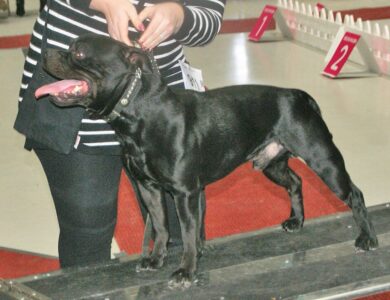
| Staffordshire Bull Terrier | UK (1935) | 13-17 kg | High | Moderate |
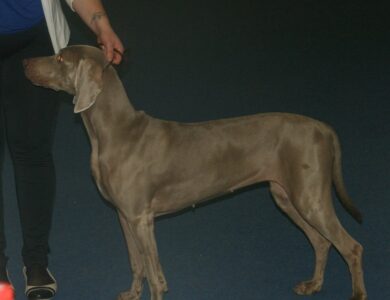
| Weimaraner | Germany (1891) | 30-40 kg | Very high | Moderate |
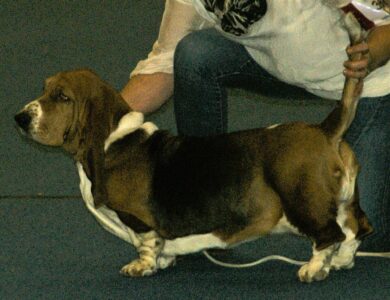
| Basset Hound | France | 25-34 kg | Low | Low |
| Bichon Frise | France/Belgium | ~5 kg | Moderate | Low |
| Maltese | Italy | 3-4 kg | Moderate | Low |
Weight and origin data from published breed standards; energy/guarding levels are general working-breed characterizations, not clinical measurements. See the full breed index for filters by size and origin.
Nutrition and Exercise
Bichon Frises need moderate daily exercise, but their real care investment is grooming — the curly coat requires regular brushing and professional grooming to stay healthy and mat-free. Given the breed’s documented elevated risk for both immune-mediated hemolytic anemia and gallbladder disease, routine veterinary checkups are worthwhile.
10 FAQs
Where does the Bichon Frise come from?
How big does a Bichon Frise get?
What was the Bichon Frise originally bred for?
What health problems are common in Bichon Frises?
How much grooming does a Bichon Frise need?
Are Bichon Frises good family dogs?
How long do Bichon Frises live?
Is the Bichon Frise hypoallergenic?
Is a Bichon Frise good for a first-time owner?
What is the Bichon Frise’s connection to European royalty?
🎥 5 Best YouTube Videos About the Bichon Frise
These videos are embedded directly using YouTube’s own official embed player, in compliance with YouTube’s Terms of Service — we don’t host, own, or claim any credit for this footage. All rights remain with each video’s original creator; click a channel name below to visit their YouTube channel.
Bichon Frise 101: Everything You Need to Know About the Cuddly Lap Dog — by Bichon Frise USA
Everything You Need to Know About a Bichon Frise — by The Pet Perspective
Dogs 101 – BICHON FRISE – Top Dog Facts About the Bichon Frise — by Brooklyns Corner
Dogs 101: Bichon Frise — by christinamgong
Bichon Frise Dog Breed Guide — by Dog Advice Videos
Dog Breed Guide Index: Every Breed We’ve Covered, Filterable by Origin, Size, and Age
Maltese: Complete Breed Guide to Temperament, Health, and Care
AI Dog Breed Photo Identifier: Upload a Photo, Get an Instant AI Match