Basset Hound: Complete Breed Guide to Temperament, Health, and Care

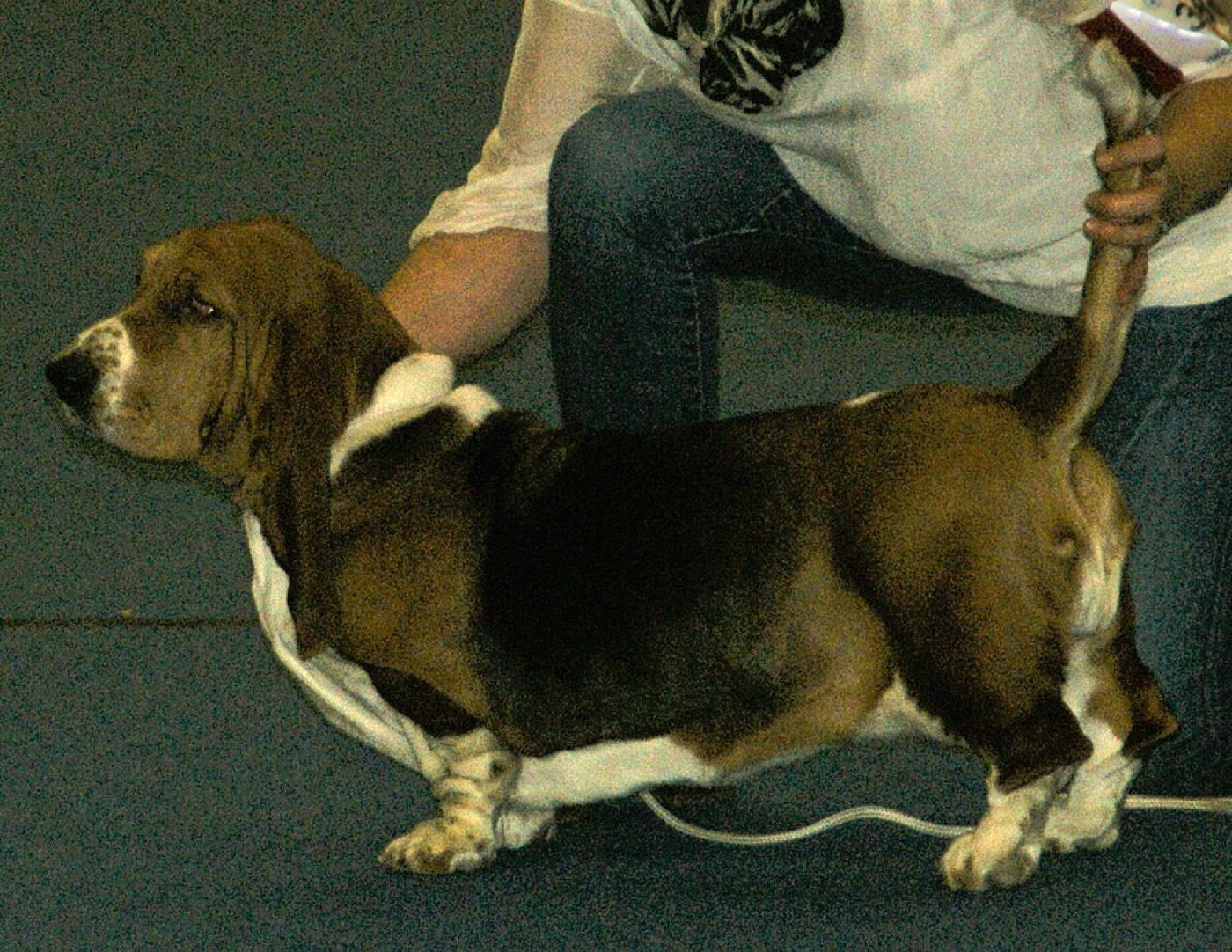
Basset Hound: Complete Breed Guide to Temperament, Health, and Care
The Basset Hound type originated in France, descended from 6th-century St. Hubert’s Hounds, with the first written mention of a “Basset” dog appearing in Jacques du Fouilloux’s 1585 hunting text La Venerie. The breed was later refined in England during the 1890s, with Everett Millais credited as “the father of the modern Basset Hound.”
Photo: Canarian / Wikimedia Commons, CC BY-SA 4.0
| Origin | Height | Weight | Lifespan | Energy Level |
|---|---|---|---|---|
| France (refined in England) | Males 30-38 cm · Females 28-36 cm | Males 25-34 kg · Females 20-29 kg | ~10-12.5 years | Low to Moderate |
Executive Summary
The Basset Hound is friendly, outgoing, and mild-mannered, deliberately bred short and low to the ground to move slowly enough that hunters could keep pace on foot rather than horseback. Its short legs and long body give it a documented, breed-specific skeletal condition worth understanding before adopting.
What Owning a Basset Hound Involves
| With training & care | Without it |
|---|---|
| Friendly, devoted companion tolerant of children and pets | Stubborn, independent streak from true scent-hound instincts |
| Careful weight and joint management given short-legged build | Osteochondrodysplasia complications from excess strain |
| Feeding practices that reduce bloat risk | Gastric dilatation volvulus, a documented breed risk |
| Regular eye checks catch glaucoma and cherry eye early | Undiagnosed glaucoma or cherry eye progressing untreated |
3 Real-World Scenarios
- A hunter working on foot rather than horseback: relies on the same trait the Basset Hound was specifically bred for — moving slowly enough on short legs that hunters never needed a horse to keep pace.
- A family wanting a mild, tolerant companion breed: picks the Basset Hound for its documented friendly, devoted temperament, especially good with children.
- An owner managing joint health given the breed’s build: watches weight closely, since the short-legged osteochondrodysplasia build that defines the breed also makes joint strain a real, documented concern.
2 Basset Hound Facts
1. The Basset Hound’s short legs are not a random trait but a deliberate breeding choice with a specific documented purpose: moving slowly enough across terrain that hunters could follow entirely on foot, without needing horses.
2. The breed’s characteristic short-legged, long-bodied structure is a genuine, named skeletal condition called osteochondrodysplasia — the same trait that defines the Basset Hound’s silhouette is a documented dwarfism-type condition, not just a stylistic feature.
🐾 Try It: What Breed Does Your Dog’s Description Match?
Click through real physical traits and see how close your dog’s description comes to a Basset Hound or another breed.
🐾 What Breed Is My Dog? Click the traits you see
Try it instantly — no sign-up. Watch the match bar grow as you go.
For fun and general guidance only — not a substitute for a professional breed evaluation or DNA test. Photo credits shown above each result.
How the Basset Hound Compares to Other Breeds We’ve Covered
| Breed | Origin | Male Weight | Energy Level | Guarding Instinct |
|---|---|---|---|---|
| Rottweiler | Germany | 50-60 kg | High | Very high |
| Doberman Pinscher | Germany (1880s) | 40-45 kg | Very high | Very high |
| German Shepherd | Germany (1899) | 30-40 kg | Very high | High |
| Beauceron | France (1587) | 30-45 kg | High | High |
| Golden Retriever | Scotland (1868) | 29-34 kg | High | Low |
| Labrador Retriever | England (1903) | 29-36 kg | High | Low |
| French Bulldog | France (1898) | 9-14 kg | Moderate | Low |
| Poodle (Standard) | Germany/France | 20-32 kg | High | Low |
| Bulldog | England (1875) | ~25 kg | Low | Low |
| Beagle | England (1830s) | 10-11 kg | High | Low |
| Dachshund | Germany (1700s) | 7-15 kg | Moderate | Moderate |
| Yorkshire Terrier | England (1870s) | ≤3.2 kg | Moderate | Low |
| Boxer | Germany (1895) | 30-32 kg | High | High |
| Siberian Husky | Russia (Chukchi) | 20-27 kg | Very high | Low |
| Great Dane | Germany (1878) | 54+ kg | Moderate | Moderate |
| Chihuahua | Mexico | 1-3 kg | High | Low |
| Pug | China | 6-8 kg | Low | Low |
| Border Collie | UK (1893) | 14-25 kg | Very high | Low |
| Australian Shepherd | USA | 16-32 kg | Very high | Moderate |
| Shih Tzu | Tibet/China | 4-7.5 kg | Moderate | Low |
| Cocker Spaniel | England | 13-14.5 kg | High | Low |
| Cavalier King Charles Spaniel | UK (1944) | 5.4-8 kg | Moderate | Low |
| Miniature Schnauzer | Germany | 4-8 kg | Moderate | Moderate |
| Pomeranian | Germany/Poland | 1.4-3.2 kg | High | Low |
| Shetland Sheepdog | Scotland (1909) | ~9-11 kg | High | Moderate |
| Bernese Mountain Dog | Switzerland (1912) | 36-55 kg | Moderate | Moderate |
| Newfoundland | Canada | 65-80 kg | Moderate | Low |
| Akita | Japan (1931) | 27-59 kg | Moderate | High |
| Alaskan Malamute | USA (Alaska) | 34-39 kg | Very high | Low |
| Bull Terrier | England | Unstandardized | High | Moderate |
| Staffordshire Bull Terrier | UK (1935) | 13-17 kg | High | Moderate |
| Weimaraner | Germany (1891) | 30-40 kg | Very high | Moderate |
| Basset Hound | France | 25-34 kg | Low | Low |
| Bichon Frise | France/Belgium | ~5 kg | Moderate | Low |
| Maltese | Italy | 3-4 kg | Moderate | Low |
Weight and origin data from published breed standards; energy/guarding levels are general working-breed characterizations, not clinical measurements. See the full breed index for filters by size and origin.
Nutrition and Exercise
Basset Hounds need moderate exercise, but weight management is especially important given their documented short-legged skeletal structure (osteochondrodysplasia), which places extra strain on joints when overweight. Feeding practices that slow eating and reduce air intake help lower the breed’s documented bloat risk.
10 FAQs
Where does the Basset Hound come from?
How big does a Basset Hound get?
Why does the Basset Hound have such short legs?
What is osteochondrodysplasia?
What health problems are common in Basset Hounds?
What was the Basset Hound originally bred for?
Are Basset Hounds good family dogs?
Who is considered the father of the modern Basset Hound?
How long do Basset Hounds live?
Is a Basset Hound good for a first-time owner?
🎥 5 Best YouTube Videos About the Basset Hound
These videos are embedded directly using YouTube’s own official embed player, in compliance with YouTube’s Terms of Service — we don’t host, own, or claim any credit for this footage. All rights remain with each video’s original creator; click a channel name below to visit their YouTube channel.
Basset Hound 101! Everything You Need To Know About Owning A Basset Hound Puppy — by Will Atherton Canine Show
Top 10 Fun Facts About Basset Hounds – Dogs 101 — by Animal Facts
Basset Hound Dog Breed Guide | Dogs 101 — by Smart Dog Lover
Dogs 101 – BASSET HOUND – Top Dog Facts About the Basset Hound — by Brooklyns Corner
Basset Hound – Dog Breed Information — by Dog World
Dog Breed Guide Index: Every Breed We’ve Covered, Filterable by Origin, Size, and Age
Beagle: Complete Breed Guide to Temperament, Health, and Care
AI Dog Breed Photo Identifier: Upload a Photo, Get an Instant AI Match