Weimaraner: Complete Breed Guide to Temperament, Health, and Care

Weimaraner: Complete Breed Guide to Temperament, Health, and Care
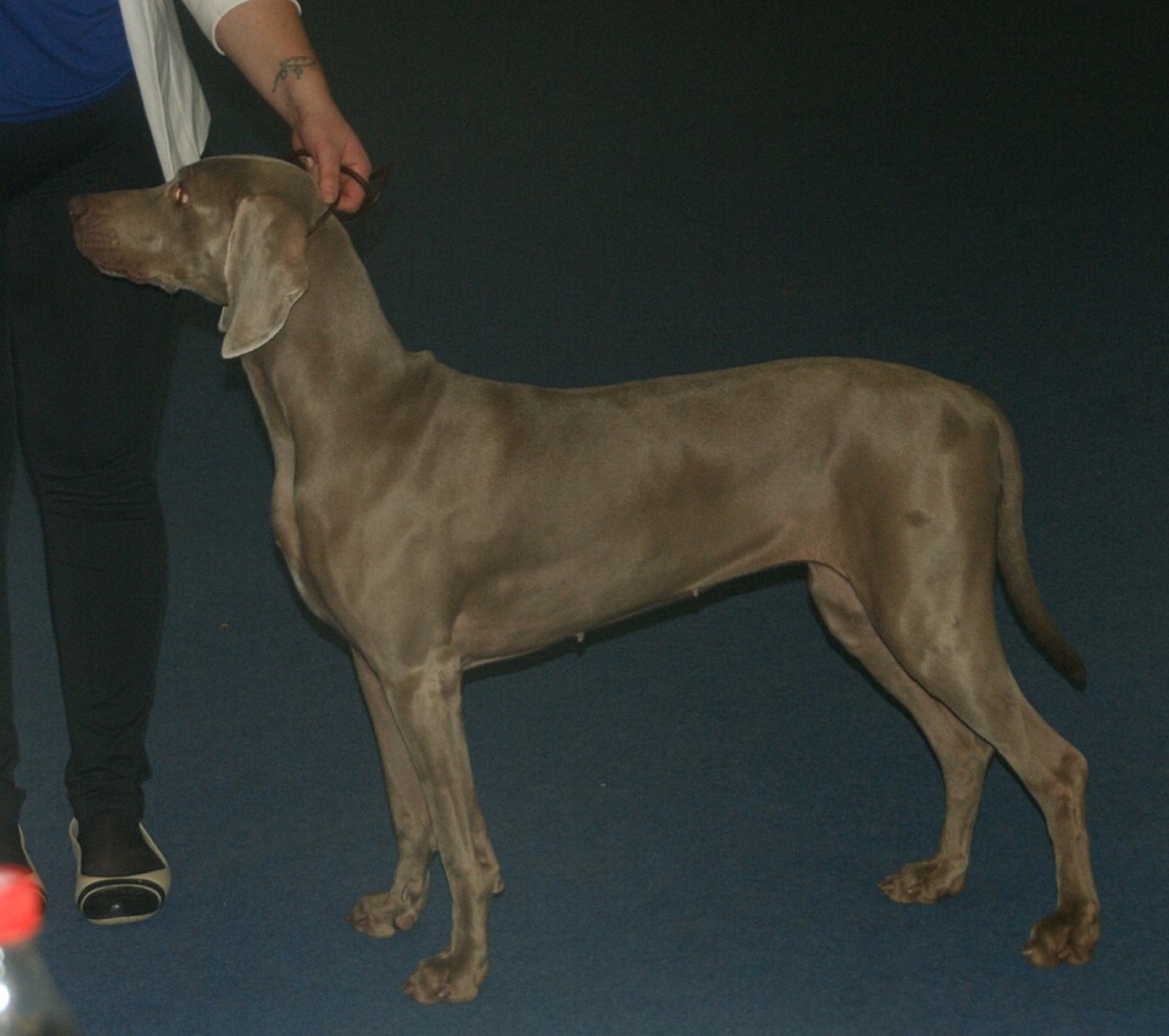
The Weimaraner originated around Weimar, Germany, in what was then Saxe-Weimar-Eisenach, with the breed formally recognized in 1891 and a dedicated breed association established in Erfurt in 1897. Known as the “Grey Ghost” for its distinctive silver-grey coat, it remains, in Germany, classified strictly as a hunting dog rather than a companion breed.
Photo: Canarian / Wikimedia Commons, CC BY-SA 4.0
| Origin | Height | Weight | Lifespan | Energy Level |
|---|---|---|---|---|
| Germany | Males 59-70 cm · Females 57-65 cm | Males 30-40 kg · Females 25-35 kg | ~12.8 years | Very High |
Executive Summary
The Weimaraner is an all-purpose gun dog defined by speed, stamina, and exceptional scenting ability. In Germany, the breed club explicitly states it is unsuitable as a purely companion dog and requires real hunting or working activity to stay balanced — a stricter working philosophy than most breeds get from their home country’s own club.
What Owning a Weimaraner Involves
| With training & care | Without it |
|---|---|
| High-drive hunting or working partner with real stamina | Anxious, destructive behavior without a real job or task |
| Awareness of neurological risk in breeding lines | Cerebellar hypoplasia or spinal dysraphism in affected puppies |
| Routine eye screening catches corneal dystrophy early | Undiagnosed corneal dystrophy or entropion |
| Understanding of Weimaraner-specific bleeding risk before surgery | Complications from undiagnosed neutrophil dysfunction |
3 Real-World Scenarios
- A hunter needing an all-purpose gun dog: picks the Weimaraner for its documented speed, stamina, and scenting ability across varied hunting terrain.
- A prospective owner considering the breed as a pure companion: learns Germany’s own breed club explicitly discourages this, insisting the Weimaraner needs real hunting or working activity to remain balanced.
- A vet preparing a Weimaraner for surgery: accounts for the breed’s documented Weimaraner-specific neutrophil dysfunction, a condition affecting blood clotting and immune response.
2 Weimaraner Facts
1. Germany’s own Weimaraner breed club takes an unusually strict stance for a companion-popular breed: it explicitly states the Weimaraner is “a hunting dog through and through” and unsuitable as a purely companion animal without real working activity.
2. The Weimaraner has a documented, breed-specific blood condition called Weimaraner-specific neutrophil dysfunction — a named condition affecting immune cell function that is essentially unique to this breed.
🐾 Try It: What Breed Does Your Dog’s Description Match?
Click through real physical traits and see how close your dog’s description comes to a Weimaraner or another breed.
🐾 What Breed Is My Dog? Click the traits you see
Try it instantly — no sign-up. Watch the match bar grow as you go.
For fun and general guidance only — not a substitute for a professional breed evaluation or DNA test. Photo credits shown above each result.
How the Weimaraner Compares to Other Breeds We’ve Covered
| Breed | Origin | Male Weight | Energy Level | Guarding Instinct |
|---|---|---|---|---|
| Rottweiler | Germany | 50-60 kg | High | Very high |
| Doberman Pinscher | Germany (1880s) | 40-45 kg | Very high | Very high |
| German Shepherd | Germany (1899) | 30-40 kg | Very high | High |
| Beauceron | France (1587) | 30-45 kg | High | High |
| Golden Retriever | Scotland (1868) | 29-34 kg | High | Low |
| Labrador Retriever | England (1903) | 29-36 kg | High | Low |
| French Bulldog | France (1898) | 9-14 kg | Moderate | Low |
| Poodle (Standard) | Germany/France | 20-32 kg | High | Low |
| Bulldog | England (1875) | ~25 kg | Low | Low |
| Beagle | England (1830s) | 10-11 kg | High | Low |
| Dachshund | Germany (1700s) | 7-15 kg | Moderate | Moderate |
| Yorkshire Terrier | England (1870s) | ≤3.2 kg | Moderate | Low |
| Boxer | Germany (1895) | 30-32 kg | High | High |
| Siberian Husky | Russia (Chukchi) | 20-27 kg | Very high | Low |
| Great Dane | Germany (1878) | 54+ kg | Moderate | Moderate |
| Chihuahua | Mexico | 1-3 kg | High | Low |
| Pug | China | 6-8 kg | Low | Low |
| Border Collie | UK (1893) | 14-25 kg | Very high | Low |
| Australian Shepherd | USA | 16-32 kg | Very high | Moderate |
| Shih Tzu | Tibet/China | 4-7.5 kg | Moderate | Low |
| Cocker Spaniel | England | 13-14.5 kg | High | Low |
| Cavalier King Charles Spaniel | UK (1944) | 5.4-8 kg | Moderate | Low |
| Miniature Schnauzer | Germany | 4-8 kg | Moderate | Moderate |
| Pomeranian | Germany/Poland | 1.4-3.2 kg | High | Low |
| Shetland Sheepdog | Scotland (1909) | ~9-11 kg | High | Moderate |
| Bernese Mountain Dog | Switzerland (1912) | 36-55 kg | Moderate | Moderate |
| Newfoundland | Canada | 65-80 kg | Moderate | Low |
| Akita | Japan (1931) | 27-59 kg | Moderate | High |
| Alaskan Malamute | USA (Alaska) | 34-39 kg | Very high | Low |
| Bull Terrier | England | Unstandardized | High | Moderate |
| Staffordshire Bull Terrier | UK (1935) | 13-17 kg | High | Moderate |
| Weimaraner | Germany (1891) | 30-40 kg | Very high | Moderate |
| Basset Hound | France | 25-34 kg | Low | Low |
| Bichon Frise | France/Belgium | ~5 kg | Moderate | Low |
| Maltese | Italy | 3-4 kg | Moderate | Low |
Weight and origin data from published breed standards; energy/guarding levels are general working-breed characterizations, not clinical measurements. See the full breed index for filters by size and origin.
Nutrition and Exercise
Weimaraners need substantial daily physical and mental exercise — true to their all-purpose gun dog design, they do poorly as a purely sedentary companion. Owners and vets should be aware of the breed’s documented neutrophil dysfunction, relevant to surgical and immune-related care.
10 FAQs
Where does the Weimaraner come from?
Why is the Weimaraner called the “Grey Ghost”?
How big does a Weimaraner get?
Is the Weimaraner a good companion dog?
What health problems are common in Weimaraners?
What was the Weimaraner originally bred for?
Do Weimaraners need a lot of exercise?
How long do Weimaraners live?
What is Weimaraner-specific neutrophil dysfunction?
Is a Weimaraner good for a first-time owner?
🎥 5 Best YouTube Videos About the Weimaraner
These videos are embedded directly using YouTube’s own official embed player, in compliance with YouTube’s Terms of Service — we don’t host, own, or claim any credit for this footage. All rights remain with each video’s original creator; click a channel name below to visit their YouTube channel.
Weimaraners 101: Everything You Need to Know — by The Hunting Dog Podcast
10 Fun Facts About Weimaraner Dogs You Should Know – Dogs 101 — by Animal Facts
Weimaraner Everything You Need To Know — by Will Atherton Canine Show
Dogs 101 – WEIMARANER – Top Dog Facts About the Weimaraner — by Brooklyns Corner
Weimaraner – All About The Dog Breed — by Dog World
Dog Breed Guide Index: Every Breed We’ve Covered, Filterable by Origin, Size, and Age
Boxer: Complete Breed Guide to Temperament, Health, and Care
AI Dog Breed Photo Identifier: Upload a Photo, Get an Instant AI Match