Shih Tzu: Complete Breed Guide to Temperament, Health, and Care

Shih Tzu: Complete Breed Guide to Temperament, Health, and Care
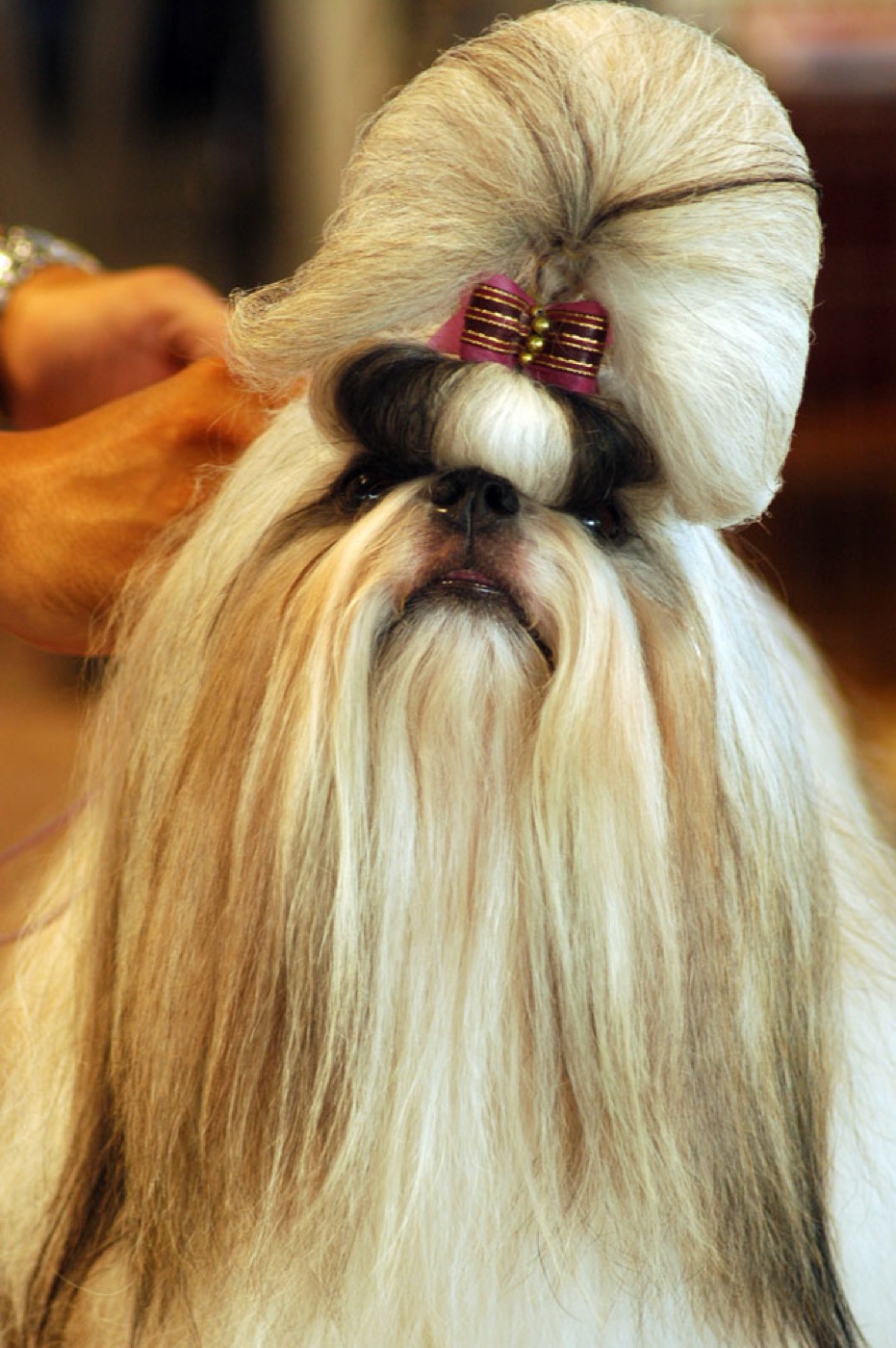
The Shih Tzu descended from crosses between Pekingese and Lhasa Apso dogs, and was a favorite of Chinese royals during the Ming Dynasty, bred deliberately to resemble the lion of traditional oriental art. The first European imports occurred in the late 1920s, and the American Kennel Club recognized the breed in 1969.
Photo: danny O. / Wikimedia Commons, CC BY 2.0
| Origin | Height | Weight | Lifespan | Energy Level |
|---|---|---|---|---|
| Tibet / China (Ming Dynasty court) | 20-28 cm | 4-7.5 kg | ~11-15 years (varies by study) | Moderate |
Executive Summary
The Shih Tzu is a companion breed through and through, deliberately bred to resemble a lion for Chinese royal courts. Its long, flowing coat and brachycephalic build both require dedicated care — daily grooming for the coat, and careful attention to breathing and heat given the shortened muzzle.
What Owning a Shih Tzu Involves
| With training & care | Without it |
|---|---|
| Affectionate lapdog companion suited to any household size | Matted, painful coat from neglected daily grooming |
| Regular cardiac screening catches mitral valve disease early | Undiagnosed heart disease progressing untreated |
| Climate-controlled environment prevents overheating | Breathing distress from brachycephalic airway in heat |
| Routine eye and ear checks catch issues early | Chronic ear infections from hair growth in the ear canal |
3 Real-World Scenarios
- An apartment owner wanting a calm, affectionate companion: picks the Shih Tzu for its moderate exercise needs and history as a dedicated companion breed for Chinese royalty.
- An owner researching the breed’s coat care needs: learns daily brushing is essential to prevent matting, given the breed’s long, flowing double coat.
- A family monitoring heart health in an aging Shih Tzu: schedules regular cardiac screening, since mitral valve disease and congestive heart failure are documented breed risks.
2 Shih Tzu Facts
1. The Shih Tzu was deliberately bred by Chinese royal court breeders to resemble a lion, drawing on the lion’s symbolic importance in Chinese Buddhist and imperial art — the breed’s name itself relates to this lion association.
2. The breed’s flowing coat and companion role kept it largely confined to Chinese royal courts for centuries; the first Shih Tzus did not reach Europe until Lady Brownrigg brought two to England in 1928.
🐾 Try It: What Breed Does Your Dog’s Description Match?
Click through real physical traits and see how close your dog’s description comes to a Shih Tzu or another breed.
🐾 What Breed Is My Dog? Click the traits you see
Try it instantly — no sign-up. Watch the match bar grow as you go.
For fun and general guidance only — not a substitute for a professional breed evaluation or DNA test. Photo credits shown above each result.
How the Shih Tzu Compares to Other Breeds We’ve Covered
| Breed | Origin | Male Weight | Energy Level | Guarding Instinct |
|---|---|---|---|---|
| Rottweiler | Germany | 50-60 kg | High | Very high |
| Doberman Pinscher | Germany (1880s) | 40-45 kg | Very high | Very high |
| German Shepherd | Germany (1899) | 30-40 kg | Very high | High |
| Beauceron | France (1587) | 30-45 kg | High | High |
| Golden Retriever | Scotland (1868) | 29-34 kg | High | Low |
| Labrador Retriever | England (1903) | 29-36 kg | High | Low |
| French Bulldog | France (1898) | 9-14 kg | Moderate | Low |
| Poodle (Standard) | Germany/France | 20-32 kg | High | Low |
| Bulldog | England (1875) | ~25 kg | Low | Low |
| Beagle | England (1830s) | 10-11 kg | High | Low |
| Dachshund | Germany (1700s) | 7-15 kg | Moderate | Moderate |
| Yorkshire Terrier | England (1870s) | ≤3.2 kg | Moderate | Low |
| Boxer | Germany (1895) | 30-32 kg | High | High |
| Siberian Husky | Russia (Chukchi) | 20-27 kg | Very high | Low |
| Great Dane | Germany (1878) | 54+ kg | Moderate | Moderate |
| Chihuahua | Mexico | 1-3 kg | High | Low |
| Pug | China | 6-8 kg | Low | Low |
| Border Collie | UK (1893) | 14-25 kg | Very high | Low |
| Australian Shepherd | USA | 16-32 kg | Very high | Moderate |
| Shih Tzu | Tibet/China | 4-7.5 kg | Moderate | Low |
| Cocker Spaniel | England | 13-14.5 kg | High | Low |
| Cavalier King Charles Spaniel | UK (1944) | 5.4-8 kg | Moderate | Low |
| Miniature Schnauzer | Germany | 4-8 kg | Moderate | Moderate |
| Pomeranian | Germany/Poland | 1.4-3.2 kg | High | Low |
| Shetland Sheepdog | Scotland (1909) | ~9-11 kg | High | Moderate |
| Bernese Mountain Dog | Switzerland (1912) | 36-55 kg | Moderate | Moderate |
| Newfoundland | Canada | 65-80 kg | Moderate | Low |
| Akita | Japan (1931) | 27-59 kg | Moderate | High |
| Alaskan Malamute | USA (Alaska) | 34-39 kg | Very high | Low |
| Bull Terrier | England | Unstandardized | High | Moderate |
| Staffordshire Bull Terrier | UK (1935) | 13-17 kg | High | Moderate |
| Weimaraner | Germany (1891) | 30-40 kg | Very high | Moderate |
| Basset Hound | France | 25-34 kg | Low | Low |
| Bichon Frise | France/Belgium | ~5 kg | Moderate | Low |
| Maltese | Italy | 3-4 kg | Moderate | Low |
Weight and origin data from published breed standards; energy/guarding levels are general working-breed characterizations, not clinical measurements. See the full breed index for filters by size and origin.
Nutrition and Exercise
Shih Tzus need only moderate daily exercise, but require significant grooming investment — daily brushing prevents painful matting in the long coat. Owners should also plan for climate control, since the breed’s brachycephalic airway makes it vulnerable to overheating.
10 FAQs
Where does the Shih Tzu come from?
How big does a Shih Tzu get?
Why was the Shih Tzu bred to look like a lion?
What health problems are common in Shih Tzus?
How much grooming does a Shih Tzu need?
When did the Shih Tzu reach Europe?
Are Shih Tzus good with children?
How long do Shih Tzus live?
Do Shih Tzus need a lot of exercise?
Is a Shih Tzu good for a first-time owner?
🎥 5 Best YouTube Videos About the Shih Tzu
These videos are embedded directly using YouTube’s own official embed player, in compliance with YouTube’s Terms of Service — we don’t host, own, or claim any credit for this footage. All rights remain with each video’s original creator; click a channel name below to visit their YouTube channel.
Shih Tzu 101: Everything You Need To Know About This Breed — by Shih Tzu Care
Shih Tzu Dogs 101: Everything You Need To Know — by Wagging Wonders
SHIH TZU 101! Everything You Need To Know About Owning A Shih Tzu Puppy! — by Will Atherton Canine Show
Shih Tzu – Dogs 101 — by heartmydogvideo
Shih Tzu Dog Breed Guide: Everything You Need to Know — by Rover
Dog Breed Guide Index: Every Breed We’ve Covered, Filterable by Origin, Size, and Age
Maltese: Complete Breed Guide to Temperament, Health, and Care
AI Dog Breed Photo Identifier: Upload a Photo, Get an Instant AI Match