Great Dane: Complete Breed Guide to Temperament, Health, and Care

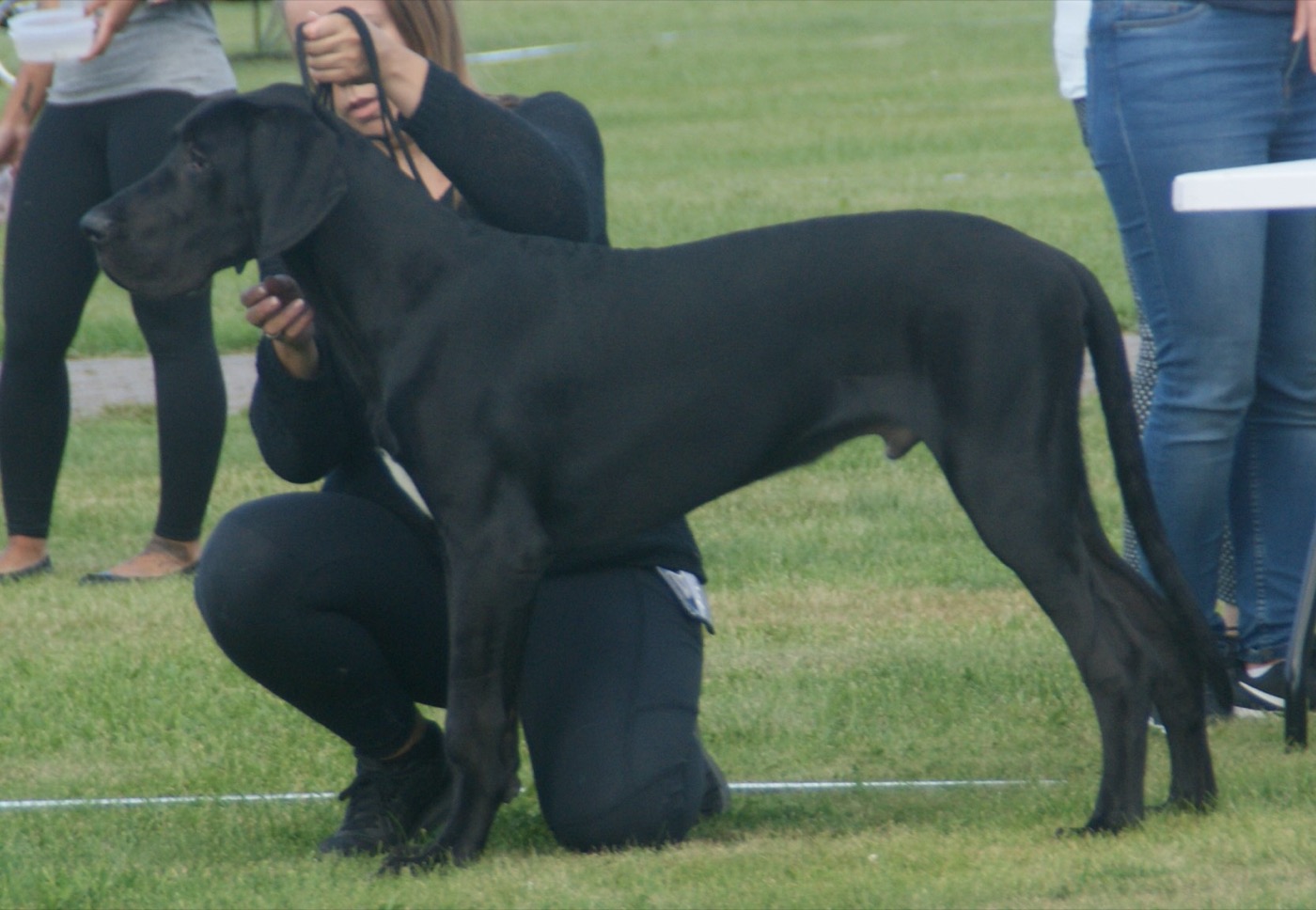
Great Dane: Complete Breed Guide to Temperament, Health, and Care
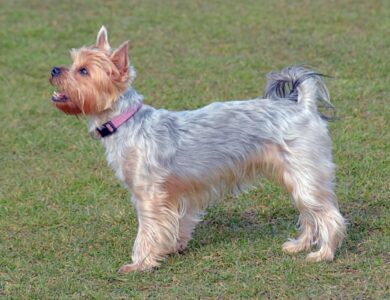
The Great Dane descends from medieval hunting dogs used by German nobility to pursue bear, wild boar, and deer at princely courts. In 1878, a Berlin committee formally renamed the breed from “Englische Dogge” to “Deutsche Dogge” (German Mastiff), establishing its modern identity — one of the tallest breeds in the world, towering over toy breeds like the Yorkshire Terrier.
Photo: Canarian / Wikimedia Commons, CC BY-SA 4.0
| Origin | Height | Weight | Lifespan | Energy Level |
|---|---|---|---|---|
| Germany (formalized 1878) | Males 80–90 cm · Females 72–84 cm | Males 54+ kg · Females 45+ kg | ~10.6 years (2024 UK study) | Moderate |
Executive Summary
The Great Dane is famously gentle for its size — generally not unduly aggressive toward people or other animals, and often called a “gentle giant.” Its sheer scale, however, brings serious documented health risks, especially bloat, the breed’s leading cause of death.
What Owning a Great Dane Involves
| With training & care | Without it |
|---|---|
| Gentle, affectionate giant-breed companion | Same enormous size raising injury risk from accidental knocks |
| Feeding practices that reduce bloat risk (smaller, frequent meals) | Gastric dilatation-volvulus (bloat), the leading cause of death in the breed |
| Routine cardiac screening catches heart disease early | Undiagnosed dilated cardiomyopathy or congenital heart disease |
| Careful puppy growth management protects joints | Hip dysplasia or Wobbler disease from unmanaged rapid growth |
3 Real-World Scenarios
- An owner researching the Great Dane’s biggest health risk: learns that bloat (gastric dilatation-volvulus) is the leading cause of death in the breed, and adopts smaller, more frequent meals and post-meal rest to reduce risk.
- A breeder managing genetic risk in merle-colored litters: screens carefully, since the merle gene is documented to carry associated vision problems.
- A family choosing a giant breed for its temperament: picks the Great Dane specifically because it is documented as generally not unduly aggressive toward people or other animals, despite its imposing size.
2 Great Dane Facts
1. Despite its name and modern German identity, the Great Dane has no historical connection to Denmark — the “Great Dane” name in English seems to have come from later French naturalist terminology rather than the breed’s actual origin.
2. In 1878, a formal committee in Berlin renamed the breed from “Englische Dogge” (English Mastiff) to “Deutsche Dogge” (German Mastiff), a deliberate act of national rebranding that shaped the breed’s modern identity as a German breed.
🐾 Try It: What Breed Does Your Dog’s Description Match?
Click through real physical traits and see how close your dog’s description comes to a Great Dane or another breed.
🐾 What Breed Is My Dog? Click the traits you see
Try it instantly — no sign-up. Watch the match bar grow as you go.
For fun and general guidance only — not a substitute for a professional breed evaluation or DNA test. Photo credits shown above each result.
How the Great Dane Compares to Other Breeds We’ve Covered
| Breed | Origin | Male Weight | Energy Level | Guarding Instinct |
|---|---|---|---|---|
| Rottweiler | Germany | 50-60 kg | High | Very high |
| Doberman Pinscher | Germany (1880s) | 40-45 kg | Very high | Very high |
| German Shepherd | Germany (1899) | 30-40 kg | Very high | High |
| Beauceron | France (1587) | 30-45 kg | High | High |
| Golden Retriever | Scotland (1868) | 29-34 kg | High | Low |
| Labrador Retriever | England (1903) | 29-36 kg | High | Low |
| French Bulldog | France (1898) | 9-14 kg | Moderate | Low |
| Poodle (Standard) | Germany/France | 20-32 kg | High | Low |
| Bulldog | England (1875) | ~25 kg | Low | Low |
| Beagle | England (1830s) | 10-11 kg | High | Low |
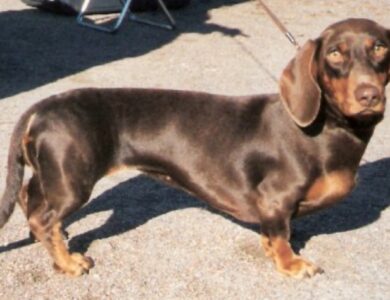
| Dachshund | Germany (1700s) | 7-15 kg | Moderate | Moderate |
| Yorkshire Terrier | England (1870s) | ≤3.2 kg | Moderate | Low |
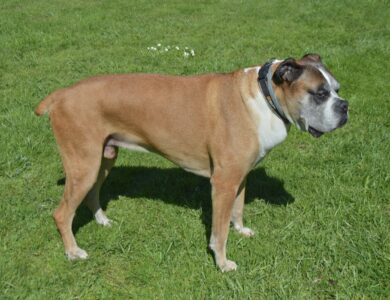
| Boxer | Germany (1895) | 30-32 kg | High | High |
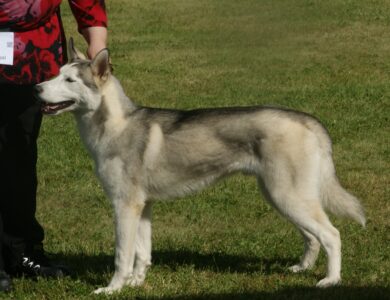
| Siberian Husky | Russia (Chukchi) | 20-27 kg | Very high | Low |
| Great Dane | Germany (1878) | 54+ kg | Moderate | Moderate |
Weight and origin data from published breed standards; energy/guarding levels are general working-breed characterizations, not clinical measurements. See the full breed index for filters by size and origin.
Nutrition and Exercise
Great Danes benefit from smaller, more frequent meals rather than one large feeding, a widely recommended practice to help reduce the risk of bloat (gastric dilatation-volvulus), the breed’s leading cause of death. Careful, controlled growth during puppyhood — not over-feeding for rapid size gain — helps protect joints from hip dysplasia and Wobbler disease.
10 FAQs
Where does the Great Dane come from?
How big does a Great Dane get?
What is the biggest health risk for Great Danes?
Are Great Danes aggressive?
What was the Great Dane originally bred for?
Why is the Great Dane called “Great Dane” if it’s German?
What other health problems affect Great Danes?
How long do Great Danes live?
How can bloat risk be reduced in Great Danes?
Is a Great Dane good for a first-time owner?
Dog Breed Guide Index: Every Breed We’ve Covered, Filterable by Origin, Size, and Age
Yorkshire Terrier: Complete Breed Guide to Temperament, Health, and Care
AI Dog Breed Photo Identifier: Upload a Photo, Get an Instant AI Match