Siberian Husky: Complete Breed Guide to Temperament, Health, and Care

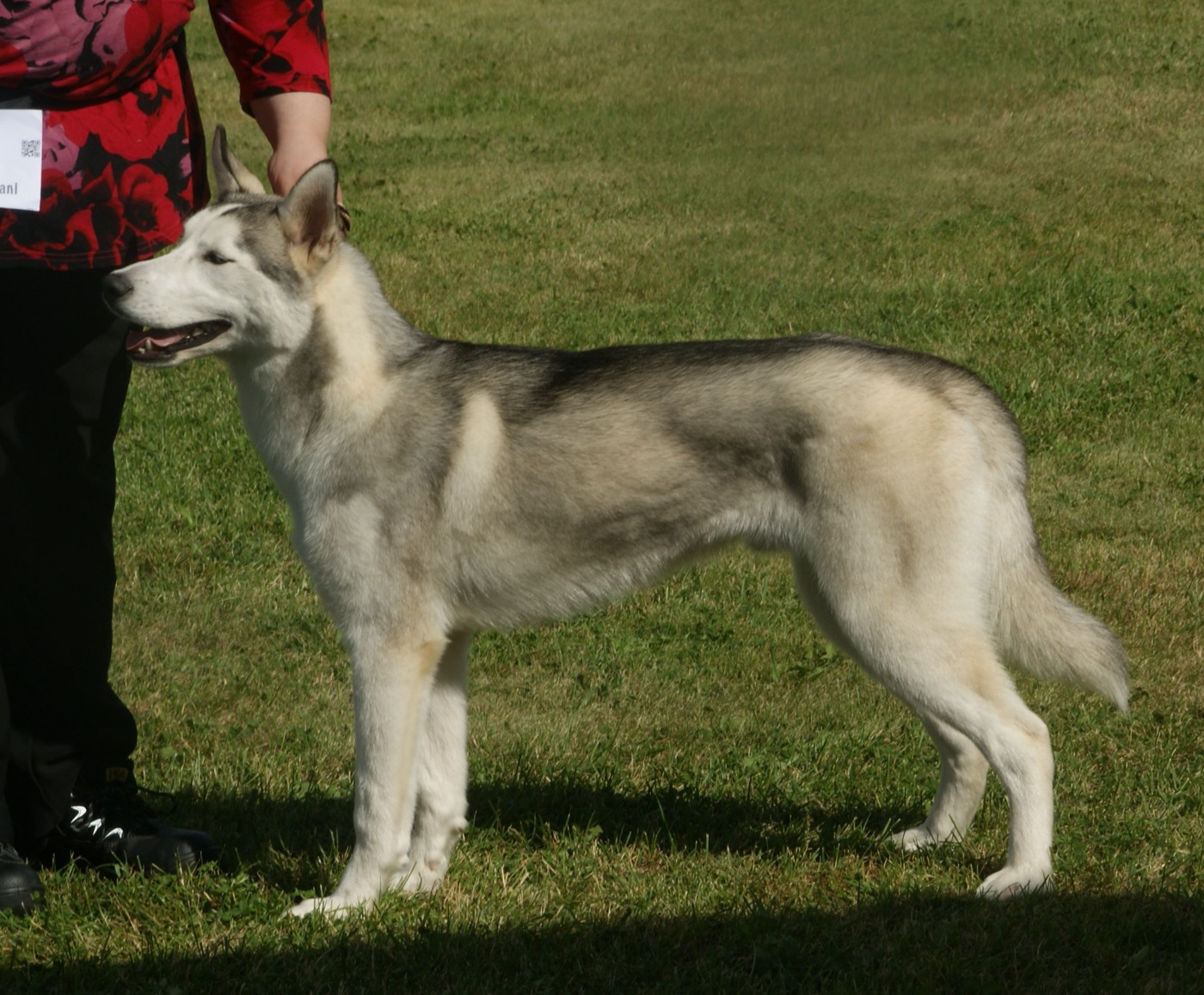
Siberian Husky: Complete Breed Guide to Temperament, Health, and Care
The Siberian Husky was developed over centuries by the Chukchi people of the Chukchi Peninsula in the Russian Far East as a sled-pulling companion built for endurance in extreme cold. Russian fur trader William Goosak introduced the breed to Nome, Alaska, during the Nome Gold Rush, and the American Kennel Club officially recognized it in 1930 — a working history as distinct from companion breeds as the Great Dane‘s is from a guarding one.
Photo: Canarian / Wikimedia Commons, CC BY-SA 4.0
| Origin | Height | Weight | Lifespan | Energy Level |
|---|---|---|---|---|
| Russia (Chukchi Peninsula) | Males 53–60 cm · Females 51–56 cm | Males 20–27 kg · Females 16–23 kg | ~11.9 years (2024 UK study) | Very High |
Executive Summary
The Siberian Husky is friendly, gentle, and highly energetic — bred for endurance sled work over vast distances, it needs substantial daily exercise and is known for howling rather than barking. Hip dysplasia, common in many large breeds, is notably rare in this one.
What Owning a Siberian Husky Involves
| With training & care | Without it |
|---|---|
| Friendly, gentle companion bonded to its people | Escape-artist tendencies from a strong pack/running drive |
| Secure, tall fencing prevents wandering | Husky roaming far given the breed’s endurance-bred stamina |
| Routine eye screening catches cataracts and PRA early | Undiagnosed juvenile cataracts, corneal dystrophy, or glaucoma |
| Substantial daily exercise satisfies working drive | Destructive or howling behavior from an under-exercised Husky |
3 Real-World Scenarios
- An owner researching escape-proof fencing: learns the Siberian Husky was bred for endurance running over vast Arctic distances, and invests in secure, tall fencing rather than standard containment.
- A family expecting a quiet dog: learns Huskies are known for howling rather than barking, a distinct vocal trait tied to their sled-dog heritage.
- An owner comparing joint-health risk across large breeds: notes that hip dysplasia, common in many large breeds, is documented as notably rare in the Siberian Husky.
2 Siberian Husky Facts
1. The Siberian Husky’s introduction to North America is tied to a specific historical event: Russian fur trader William Goosak brought the breed to Nome, Alaska, during the Nome Gold Rush, where its sled-pulling ability made it locally famous before AKC recognition in 1930.
2. Unlike most large working breeds, hip dysplasia is documented as rare in the Siberian Husky — a notable exception given how common the condition is across similarly sized breeds.
🐾 Try It: What Breed Does Your Dog’s Description Match?
Click through real physical traits and see how close your dog’s description comes to a Siberian Husky or another breed.
🐾 What Breed Is My Dog? Click the traits you see
Try it instantly — no sign-up. Watch the match bar grow as you go.
For fun and general guidance only — not a substitute for a professional breed evaluation or DNA test. Photo credits shown above each result.
How the Siberian Husky Compares to Other Breeds We’ve Covered
| Breed | Origin | Male Weight | Energy Level | Guarding Instinct |
|---|---|---|---|---|
| Rottweiler | Germany | 50-60 kg | High | Very high |
| Doberman Pinscher | Germany (1880s) | 40-45 kg | Very high | Very high |
| German Shepherd | Germany (1899) | 30-40 kg | Very high | High |
| Beauceron | France (1587) | 30-45 kg | High | High |
| Golden Retriever | Scotland (1868) | 29-34 kg | High | Low |
| Labrador Retriever | England (1903) | 29-36 kg | High | Low |
| French Bulldog | France (1898) | 9-14 kg | Moderate | Low |
| Poodle (Standard) | Germany/France | 20-32 kg | High | Low |
| Bulldog | England (1875) | ~25 kg | Low | Low |
| Beagle | England (1830s) | 10-11 kg | High | Low |
| Dachshund | Germany (1700s) | 7-15 kg | Moderate | Moderate |
| Yorkshire Terrier | England (1870s) | ≤3.2 kg | Moderate | Low |
| Boxer | Germany (1895) | 30-32 kg | High | High |
| Siberian Husky | Russia (Chukchi) | 20-27 kg | Very high | Low |
| Great Dane | Germany (1878) | 54+ kg | Moderate | Moderate |
Weight and origin data from published breed standards; energy/guarding levels are general working-breed characterizations, not clinical measurements. See the full breed index for filters by size and origin.
Nutrition and Exercise
Siberian Huskies need substantial daily exercise to match their endurance-bred stamina — long runs, sledding or skijoring where possible, and secure off-leash space are ideal. They are typically efficient eaters bred for sustained work rather than bulk, so portion sizes often run smaller than owners expect for the breed’s activity level.
10 FAQs
Where does the Siberian Husky come from?
How big does a Siberian Husky get?
What was the Siberian Husky originally bred for?
Do Siberian Huskies bark a lot?
Are Siberian Huskies escape artists?
What health problems are common in Siberian Huskies?
How much exercise does a Siberian Husky need?
When was the Siberian Husky recognized by the AKC?
Are Siberian Huskies good family dogs?
Is a Siberian Husky good for a first-time owner?
Dog Breed Guide Index: Every Breed We’ve Covered, Filterable by Origin, Size, and Age
Great Dane: Complete Breed Guide to Temperament, Health, and Care
AI Dog Breed Photo Identifier: Upload a Photo, Get an Instant AI Match