Boxer: Complete Breed Guide to Temperament, Health, and Care

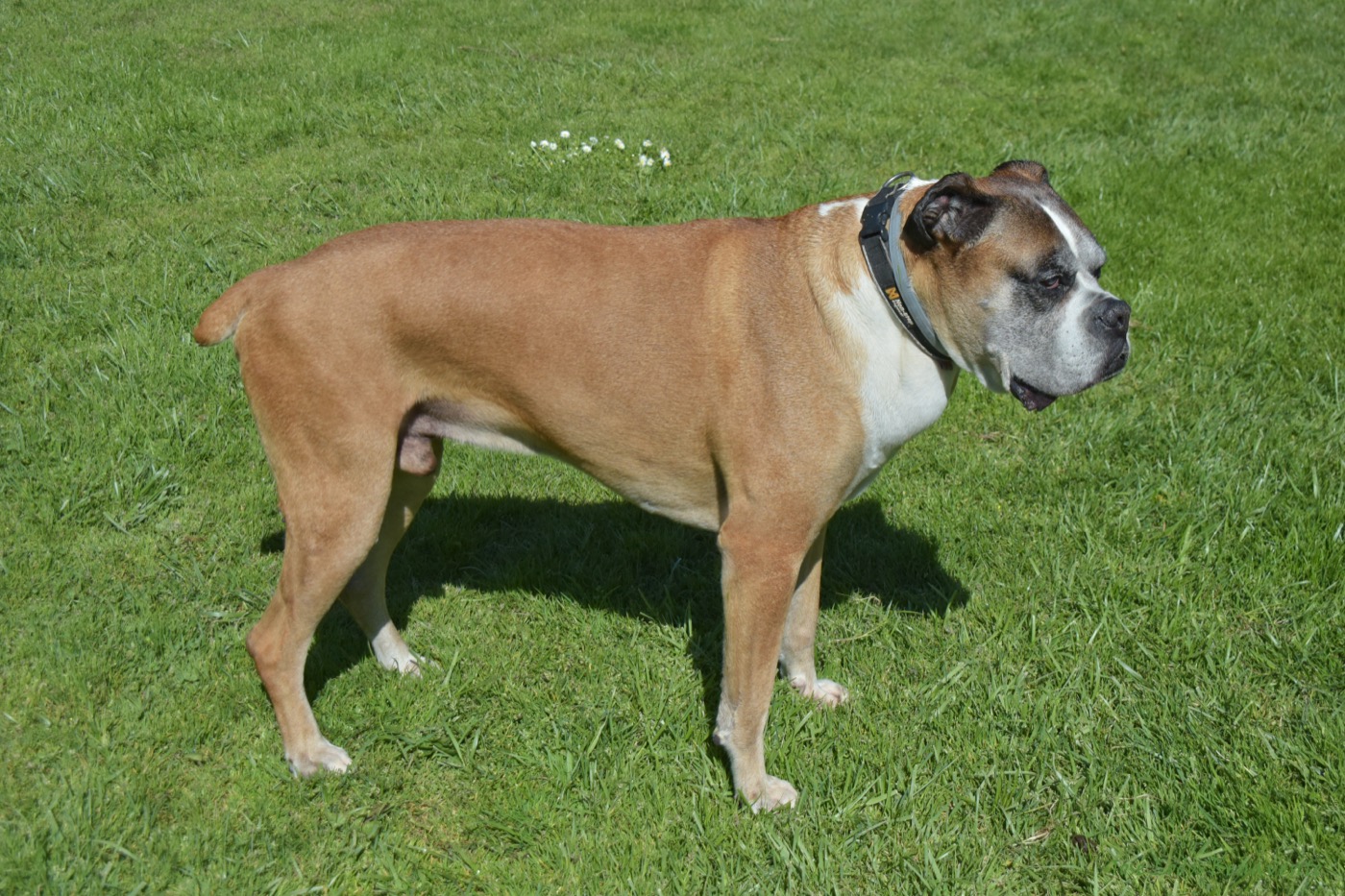
Boxer: Complete Breed Guide to Temperament, Health, and Care
The Boxer was developed in late-19th-century Germany from the now-extinct Bullenbeisser, a hunting mastiff used to pursue bear, wild boar, and deer at princely courts. The first Boxer club formed in 1895, the breed debuted at a Munich dog show in 1896, and its official standard followed in 1904 — a working pedigree it shares with fellow German breeds like the Rottweiler and Doberman Pinscher.
Photo: Joselodos / Wikimedia Commons, CC0
| Origin | Height | Weight | Lifespan | Energy Level |
|---|---|---|---|---|
| Germany (late 1800s) | Males 56–64 cm · Females 53–61 cm | Males 30–32 kg · Females 25–27 kg | 9–11.3 years (varies by study) | High |
Executive Summary
The Boxer is bright, energetic, and playful, with great loyalty to its household and documented patience with children — but it also carries a notably elevated cancer risk, responsible for an estimated 38.5% of deaths in the breed, making regular veterinary screening especially important.
What Owning a Boxer Involves
| With training & care | Without it |
|---|---|
| Playful, loyal companion, patient with children | Distrustful, on-guard behavior toward strangers if under-socialized |
| Routine cardiac screening catches Boxer cardiomyopathy early | Undiagnosed heart conditions, a well-documented breed risk |
| Regular cancer screening supports early detection | Cancer, responsible for an estimated 38.5% of Boxer deaths |
| Mental and physical stimulation channels high energy | Destructive behavior from an under-exercised, bored Boxer |
3 Real-World Scenarios
- An owner researching the Boxer’s biggest health risk: learns cancer accounts for an estimated 38.5% of deaths in the breed, and prioritizes a vet who screens proactively rather than reactively.
- A family with children choosing an energetic breed: picks the Boxer for its documented patience and spirited affection with kids, while planning for its substantial exercise needs.
- A breeder screening for cardiac risk: tests specifically for Boxer cardiomyopathy and aortic stenosis, two well-documented heart conditions in the breed.
2 Boxer Facts
1. The Boxer’s direct ancestor, the Bullenbeisser (“bull-biter”), is now extinct as a distinct breed — it survives only through the Boxer and a handful of other German breeds that absorbed its working lines.
2. A specific inherited heart condition, Boxer cardiomyopathy (arrhythmogenic right ventricular cardiomyopathy), is documented closely enough in the breed that it is sometimes referred to in veterinary literature by the breed’s own name.
🐾 Try It: What Breed Does Your Dog’s Description Match?
Click through real physical traits and see how close your dog’s description comes to a Boxer or another breed.
🐾 What Breed Is My Dog? Click the traits you see
Try it instantly — no sign-up. Watch the match bar grow as you go.
For fun and general guidance only — not a substitute for a professional breed evaluation or DNA test. Photo credits shown above each result.
How the Boxer Compares to Other Breeds We’ve Covered
| Breed | Origin | Male Weight | Energy Level | Guarding Instinct |
|---|---|---|---|---|
| Rottweiler | Germany | 50-60 kg | High | Very high |
| Doberman Pinscher | Germany (1880s) | 40-45 kg | Very high | Very high |
| German Shepherd | Germany (1899) | 30-40 kg | Very high | High |
| Beauceron | France (1587) | 30-45 kg | High | High |
| Golden Retriever | Scotland (1868) | 29-34 kg | High | Low |
| Labrador Retriever | England (1903) | 29-36 kg | High | Low |
| French Bulldog | France (1898) | 9-14 kg | Moderate | Low |
| Poodle (Standard) | Germany/France | 20-32 kg | High | Low |
| Bulldog | England (1875) | ~25 kg | Low | Low |
| Beagle | England (1830s) | 10-11 kg | High | Low |
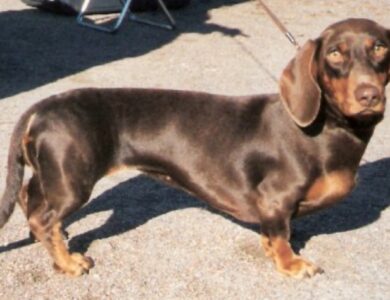
| Dachshund | Germany (1700s) | 7-15 kg | Moderate | Moderate |
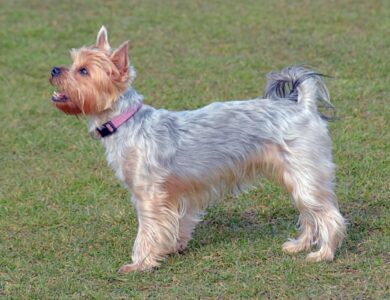
| Yorkshire Terrier | England (1870s) | ≤3.2 kg | Moderate | Low |
| Boxer | Germany (1895) | 30-32 kg | High | High |
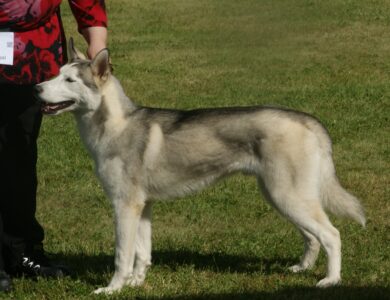
| Siberian Husky | Russia (Chukchi) | 20-27 kg | Very high | Low |
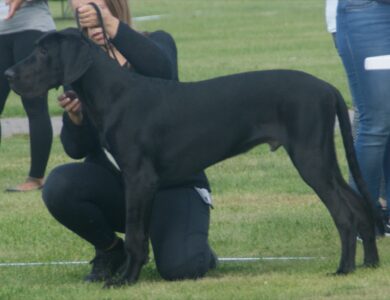
| Great Dane | Germany (1878) | 54+ kg | Moderate | Moderate |
Weight and origin data from published breed standards; energy/guarding levels are general working-breed characterizations, not clinical measurements. See the full breed index for filters by size and origin.
Nutrition and Exercise
Boxers need substantial daily exercise to match their high energy and working heritage, along with mental stimulation to prevent boredom-driven behavior. Given the breed’s documented cancer and cardiac risks, many owners prioritize regular veterinary screening over diet changes alone.
10 FAQs
Where does the Boxer come from?
How big does a Boxer get?
What is the biggest health risk for Boxers?
What is Boxer cardiomyopathy?
Are Boxers good with children?
What was the Boxer originally bred for?
Do Boxers need a lot of exercise?
How does a Boxer compare to a Doberman?
Are Boxers distrustful of strangers?
How long do Boxers live?
Dog Breed Guide Index: Every Breed We’ve Covered, Filterable by Origin, Size, and Age
Doberman Pinscher: Complete Breed Guide to Temperament, Health, and Care
AI Dog Breed Photo Identifier: Upload a Photo, Get an Instant AI Match