Golden Retriever: Complete Breed Guide to Temperament, Health, and Care

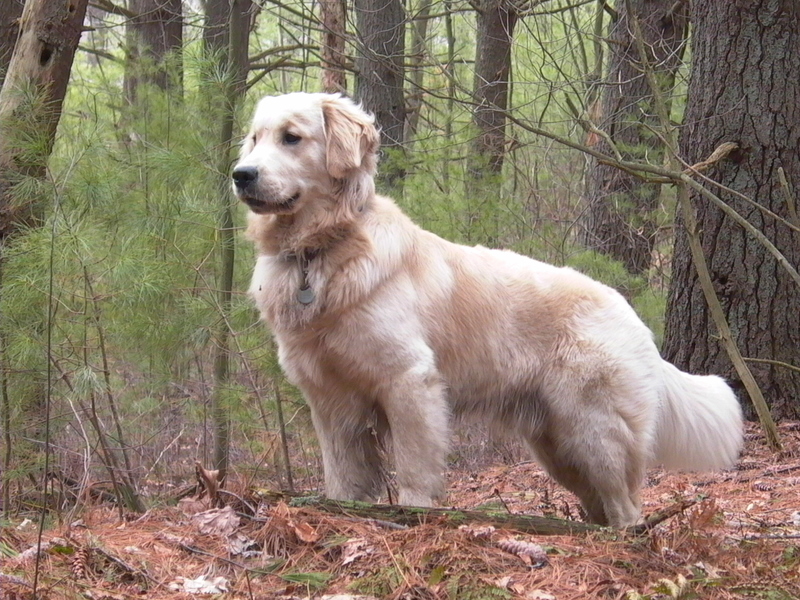
Golden Retriever: Complete Breed Guide to Temperament, Health, and Care
The Golden Retriever was developed in late-19th-century Scotland by Sir Dudley Marjoribanks at his Guisachan estate, who crossed Flat-Coated Retrievers with Tweed Water Spaniels (plus Red Setter, Labrador Retriever, and Bloodhound lines) to create a gundog suited to retrieving waterfowl and gamebirds. The Kennel Club recognized the breed in 1913, and it has since become one of the world’s most popular family and service dogs — a very different temperament profile from the guarding breeds covered in our guides to the Rottweiler and German Shepherd.
Photo: Edward (the sentinel) / Wikimedia Commons, CC BY 2.0
| Origin | Height | Weight | Lifespan | Energy Level |
|---|---|---|---|---|
| Scotland (recognized 1913) | Males 56–61 cm · Females 51–56 cm | 25–34 kg | ~13.2 years (2024 UK study median) | High |
Executive Summary
The Golden Retriever is intelligent, gentle, and eager to please — bred as a hunting companion to retrieve downed birds without damaging them, a trait that shaped its famously soft mouth and biddable temperament. It is a poor guard dog by design (friendly toward strangers) but an excellent family companion, therapy dog, and service dog.
What Owning a Golden Retriever Involves
| With training & exercise | Without it |
|---|---|
| Calm, affectionate family companion | Excess energy channeled into chewing/jumping |
| Excellent with children and other pets | Overly boisterous greeting behavior |
| Routine cancer/hip screening catches issues early | Undiagnosed hip dysplasia or tumors progressing silently |
| Mental stimulation (retrieving games, training) satisfies working drive | Boredom-driven destructiveness |
3 Real-World Scenarios
- A family choosing a first dog with young children: picks the Golden Retriever specifically for its low guarding instinct and documented gentle temperament, in contrast to the higher-guarding breeds in our comparison table.
- An owner researching cancer risk before adopting: learns that Golden Retrievers show an unusually high predisposition to cancer (roughly 50% in US populations per published research), and prioritizes a breeder who screens breeding lines.
- A trainer selecting a service or therapy dog candidate: relies on the breed’s documented biddability and soft-mouth retrieving trait, the same qualities Sir Dudley Marjoribanks originally bred for in 19th-century Scotland.
2 Golden Retriever Facts
1. The breed’s founding is unusually well documented: Sir Dudley Marjoribanks kept detailed breeding records at his Guisachan estate in Scotland starting in the 1860s, tracing the exact cross of Flat-Coated Retriever, Tweed Water Spaniel, Red Setter, Labrador Retriever, and Bloodhound lines that created the Golden Retriever.
2. A 2024 UK study found Golden Retrievers have a median life expectancy of 13.2 years, slightly above the 12.7-year average for purebred dogs generally — despite the breed’s well-documented elevated cancer risk.
🐾 Try It: What Breed Does Your Dog’s Description Match?
Click through real physical traits and see how close your dog’s description comes to a Golden Retriever or another popular breed.
🐾 What Breed Is My Dog? Click the traits you see
Try it instantly — no sign-up. Watch the match bar grow as you go.
For fun and general guidance only — not a substitute for a professional breed evaluation or DNA test. Photo credits shown above each result.
How the Golden Retriever Compares to Similar Popular Breeds
| Breed | Origin | Male Weight | Energy Level | Guarding Instinct |
|---|---|---|---|---|
| Rottweiler | Germany | 50-60 kg | High | Very high |
| Doberman Pinscher | Germany (1880s) | 40-45 kg | Very high | Very high |
| German Shepherd | Germany (1899) | 30-40 kg | Very high | High |
| Beauceron | France (1587) | 30-45 kg | High | High |
| Golden Retriever | Scotland (1868) | 29-34 kg | High | Low |
| Labrador Retriever | England (1903) | 29-36 kg | High | Low |
| French Bulldog | France (1898) | 9-14 kg | Moderate | Low |
| Poodle (Standard) | Germany/France | 20-32 kg | High | Low |
| Bulldog | England (1875) | ~25 kg | Low | Low |
| Beagle | England (1830s) | 10-11 kg | High | Low |
| Dachshund | Germany (1700s) | 7-15 kg | Moderate | Moderate |
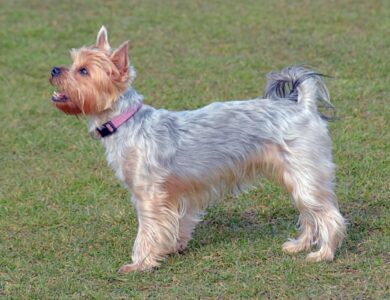
| Yorkshire Terrier | England (1870s) | ≤3.2 kg | Moderate | Low |
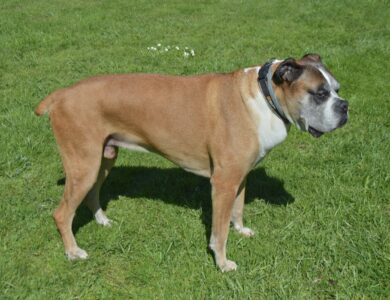
| Boxer | Germany (1895) | 30-32 kg | High | High |
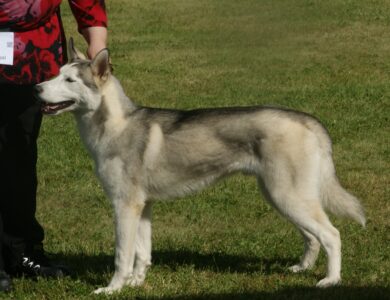
| Siberian Husky | Russia (Chukchi) | 20-27 kg | Very high | Low |
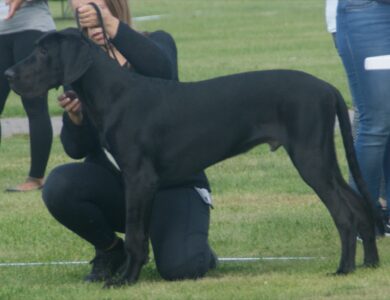
| Great Dane | Germany (1878) | 54+ kg | Moderate | Moderate |
Weight and origin data from published breed standards; energy/guarding levels are general working-breed characterizations, not clinical measurements. See the full breed index for filters by size and origin.
Nutrition and Exercise
Golden Retrievers need substantial daily exercise — retrieving games, swimming, and long walks suit their working heritage — combined with portion control, since the breed is prone to weight gain. Given the documented cancer predisposition, many owners work with their vet on preventive screening rather than diet changes alone.
10 FAQs
Where does the Golden Retriever come from?
How big does a Golden Retriever get?
What was the Golden Retriever originally bred for?
What health problems are common in Golden Retrievers?
Are Golden Retrievers good family dogs?
Do Golden Retrievers make good guard dogs?
How much exercise does a Golden Retriever need?
How long do Golden Retrievers live?
Is a Golden Retriever good for a first-time owner?
How does a Golden Retriever compare to a Labrador Retriever?
Rottweiler: Complete Breed Guide to Temperament, Health, and Care
German Shepherd: Complete Breed Guide to Temperament, Health, and Care
AI Dog Breed Photo Identifier: Upload a Photo, Get an Instant AI Match
Dog Breed Guide Index: Every Breed We’ve Covered, Filterable by Origin, Size, and Age