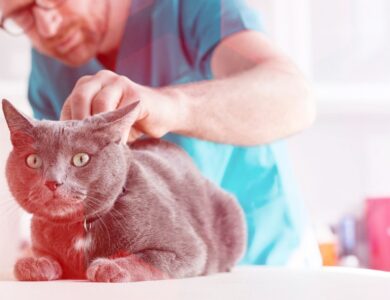
What is feline hyperesthesia syndrome?


What is feline hyperesthesia syndrome?
Understanding Feline Hyperesthesia Syndrome: A Guide for Concerned Owners
If you are reading this article late at night, and the sounds of your cat’s anxiety or discomfort are keeping you awake, please know that what you are feeling—the deep worry and confusion—is completely normal. Feline Hyperesthesia Syndrome (FHS) can be incredibly perplexing for pet owners, as the symptoms often appear sudden, dramatic, and seem disproportionate to any obvious trigger.
Witnessing your normally calm cat suddenly exhibiting intense skin reactions, excessive licking, or bizarre grooming behaviors can feel alarming. It’s natural to ask, “What is wrong with them? Is it just stress?” While situational stress can contribute, FHS is a complex condition involving heightened nerve sensitivity in the skin and nervous system. Our goal here at VeterinaryGuide.com is not just to label the condition, but to give you a comprehensive understanding of its triggers, the challenges of diagnosis, and the steps your veterinarian will take to help restore comfort and calm to your beloved companion.
What Exactly Is Feline Hyperesthesia Syndrome?
In simple terms, Hyperesthesia Syndrome refers to an exaggerated or hypersensitive reaction of the skin and nervous system in cats. It is not a single disease but rather a complex pattern of symptoms characterized by heightened sensory input processing. Instead of reacting normally to environmental stimuli—like brushing, rough textures, or even their own grooming—the cat experiences these inputs as intensely irritating, sometimes painful, or profoundly unsettling.
The symptoms are highly varied and can include dramatic rolling over, excessive localized licking (often leading to alopecia), skin rashes, tremors, exaggerated grooming behaviors (psychogenic alopecia), or even sudden, seemingly random bouts of agitation. Because the signs are so variable, vets often struggle initially to pinpoint a single cause, requiring thorough detective work.
If the cat is showing signs of severe distress, uncontrolled tremors leading to collapse, rapid skin ulceration (open wounds), or if grooming behaviors interfere with essential self-care and result in bleeding.
Understanding the Underlying Mechanisms
The root of FHS often lies in a combination of dermatological sensitivities and neurological overreactivity. When cat skin is chronically irritated, whether by allergies or minor trauma, it can create inflammation that sensitizes nearby nerve endings (a process called neuropathic itch). These sensitized nerves amplify signals, causing the seemingly minor input—like the movement of clothing against the fur—to register as a major assault.
The skin and nervous system in cats are deeply connected through the peripheral nerves. When chronic inflammation affects the dermis, it can lower the threshold for pain perception, meaning minor stimuli (like feather brushing) feel much stronger than they should.
What Triggers the Episodes?
Triggers are one of the most difficult aspects to manage, as what irritates one cat might not affect another. These triggers can be broadly divided into environmental, physical, and emotional categories.
- Allergens (Physical/Environmental): The most common causes. These could be pollen, dust mites, grasses (atopic dermatitis), or even ingredients found in human food residue that the cat chews up.
- Stress and Anxiety (Emotional): Sudden changes in routine, new pets, moving furniture, or loud noises can trigger a massive release of stress hormones, which lowers the cat’s tolerance for sensation.
- Skin Trauma and Secondary Infection (Physical): Chronic licking removes natural oils and creates open wounds, leading to secondary bacterial or yeast infections, which further exacerbates the nerve sensitivity.
To minimize environmental triggers, consider using a high-quality HEPA air purifier in your cat’s main resting areas and implementing a consistent grooming routine for all household members to reduce dander exposure.
The Diagnostic Challenge (The Vet’s Role)
Because FHS presents as a syndrome—a cluster of symptoms without a single identifiable cause—veterinarians must use an elimination process, ruling out infectious diseases, immune deficiencies, pain (pain assessment is crucial), and systemic issues first.
High
High
Moderate
Effective Treatment and Management
Treatment for FHS is almost always multimodal, meaning it requires addressing the problem from several angles—medicinal, behavioral, and environmental. No single medication or intervention cures the underlying hypersensitivity.
- Veterinary Medication (The Symptom Management): Your vet may prescribe anti-itch medications, systemic steroids (for short periods), or specialized sedatives/anxiety management drugs to break the cycle of excessive scratching and licking.
- Dietary Adjustments (The Allergy Focus): A highly controlled elimination diet, often under veterinary supervision, is used to rule out food sensitivities that may be contributing to the chronic skin irritation.
- Behavioral Modification (The Owner’s Role): This involves desensitization and counter-conditioning—teaching your cat to associate calm, quiet times with positive experiences rather than associating anxiety with the environment.
Sometimes, the extreme behavioral manifestations of FHS are a physical manifestation of chronic pain. Therefore, your veterinarian must perform thorough pain assessments (such as orthopedic exams and nerve monitoring) to ensure true discomfort isn’t being masked by behavioral overcompensation.
Real-World Scenarios
To help illustrate how FHS presents in a clinical setting, here are three composite scenarios:
Scenario 1: The Play Trigger
A typically playful indoor cat suddenly begins exhibiting intense, focused skin picking and excessive rolling over when a favorite toy is used near them or when they encounter an unfamiliar sound. This suggests that sensory input associated with play or novelty may be a critical behavioral trigger.
Scenario 2: The Allergic Escalation
A cat arrives at the clinic whose skin shows multiple patches of erythema (redness) and bald spots, particularly around the hindquarters. Initial investigation points strongly toward allergic dermatitis which has compromised the skin barrier, leading to chronic pruritus (itching) that fuels the hypersensitive cycle.
Scenario 3: The Environmental Shift
A normally calm cat, who previously managed well, suddenly begins pacing and exhibiting dramatic grooming sessions only after the human family moves to a new house or when new household members are introduced. This points strongly toward severe environmental stress as the primary catalyst for the heightened anxiety responses.
Feline Hyperesthesia Syndrome is a complex cycle of heightened sensory perception, requiring diagnosis from all angles—dermatology, neurology, and behavior—and continuous management.
Related Topics for Deeper Understanding
Understanding the scope of pet health requires continuous learning. While FHS is complex, many underlying causes overlap with general cat wellness topics:
- Can indoor cats get fleas? (Understanding parasites is key to skin health.)
- Can dogs get sunburned? (While for dogs, understanding environmental damage emphasizes the need for preventive care.)
- What is the recovery process after a dog is spayed? (Recovery care highlights general post-surgical monitoring and systemic wellness.)
- Are grain-free diets safe for dogs? (Dietary concerns are often connected to skin and gut health.)
- Legislação na Saúde Animal — Guia Animal (Brazil, in Portuguese)
- Guia das Raças de cachorros — Guia Animal (Brazil, in Portuguese)
- Gatos — Guia Animal (Brazil, in Portuguese)
Frequently Asked Questions About FHS
Is Feline Hyperesthesia Syndrome always caused by allergies?
No, while allergic triggers are extremely common, FHS can be initiated or worsened by neurological issues (like generalized anxiety), pain from arthritis or dental disease, and environmental stressors. Therefore, ruling out other primary medical causes is critical.
Can topical treatments alone cure FHS?
Topical shampoos or skin washes can help manage secondary infections and inflammation. However, because FHS is fundamentally a nervous system hypersensitivity issue, the underlying anxiety and pain signals must be addressed with systemic medication or behavioral therapy for true improvement.
Is the behavior always due to pain?
Not necessarily. While pain often contributes, extreme grooming and agitation can be purely behavioral responses to stress or a perceived violation of personal space, even if no physical wound is present.
How long does the recovery process typically take?
Recovery is highly individualized. With diligent adherence to medication, diet control, and environmental enrichment from the owner, many cats show significant improvement within a few months, but it often requires long-term management rather than a quick cure.
Does gender or breed affect the risk of FHS?
While some anecdotal reports suggest certain breeds might be more prone to skin issues, science indicates that FHS is largely influenced by individual biochemistry and environmental exposure rather than genetics alone. Both male and female cats can be affected.
What is the difference between FHS and standard pruritus (itching)?
Pruritus is simply chronic itching due to allergies or parasites. FHS involves an exaggeration of that itch—a neurological loop where minor touch causes a disproportionate, dramatic reaction accompanied by distress and tremors, indicating nervous system overactivity.
If you suspect your cat is suffering from FHS, the single most important actionable step you can take is to document thoroughly. Keep a detailed log noting what triggers the episodes (scents, sounds, handling), when they occur during the day, and what the severity of the reaction is. This data will be invaluable evidence for your veterinarian.
Keywords: feline hyperesthesia syndrome, FHS, cat skin hypersensitivity, excessive cat grooming, cat anxiety symptoms, feline pruritus causes, cat dermatological issues, behavioral medicine cats, veterinary dermatology, chronic itch in cats, cat neurodermatitis, pet care guide, stress triggers in cats, diagnosing FHS, feline systemic inflammation, holistic cat care, hyperesthesia definition, cat emotional distress, vet telehealth, advanced feline care